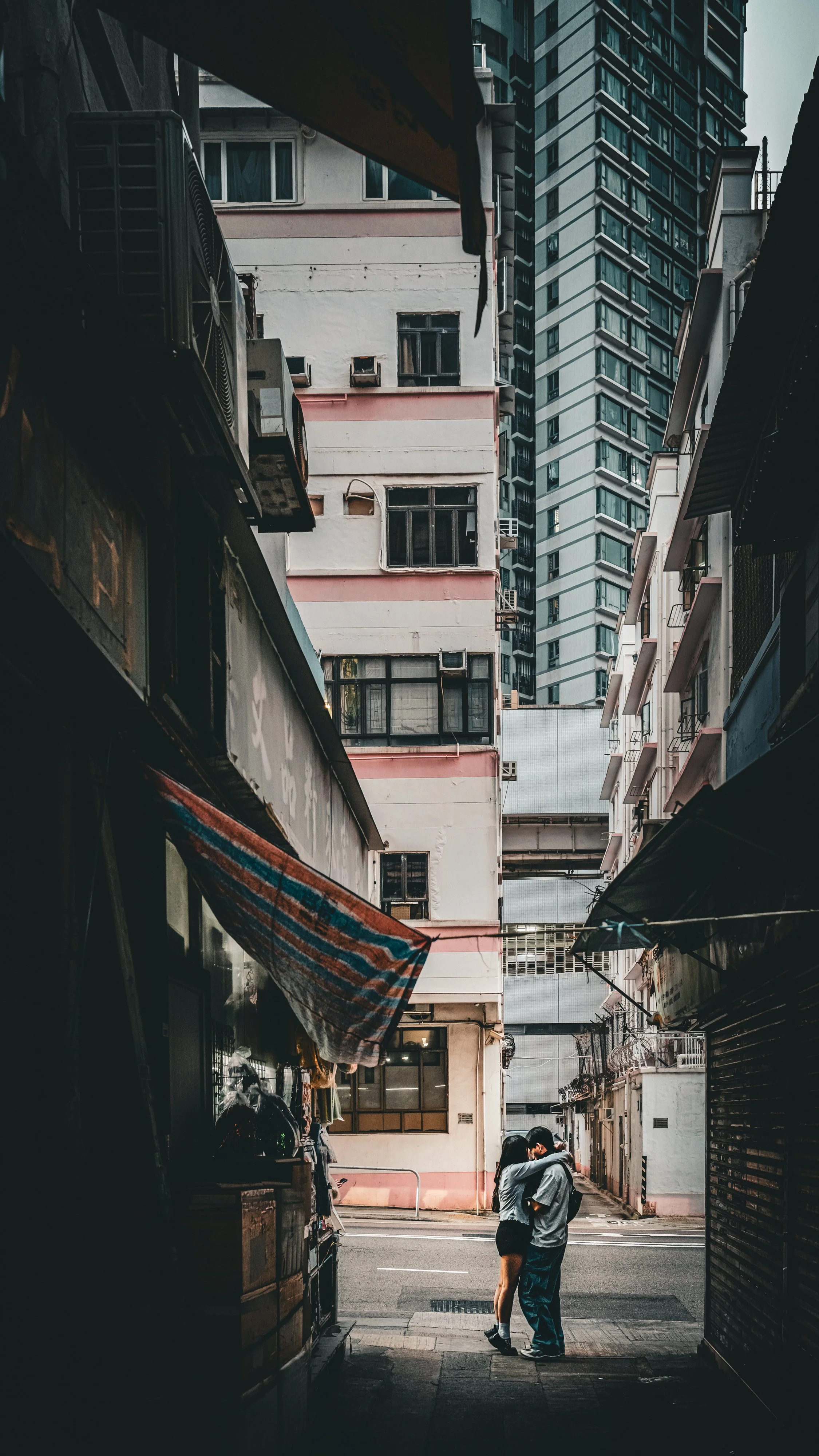
Every city has a face it shows the world and a face it hides. Hong Kong is no different, though the contrast here feels particularly stark. The front-facing city is all gleaming towers and polished shopping districts, harbor views and Instagram-worthy skylines. But turn down any side street, push through a service entrance, walk past the dumpsters, and you'll find the other Hong Kong, the one that makes everything work.
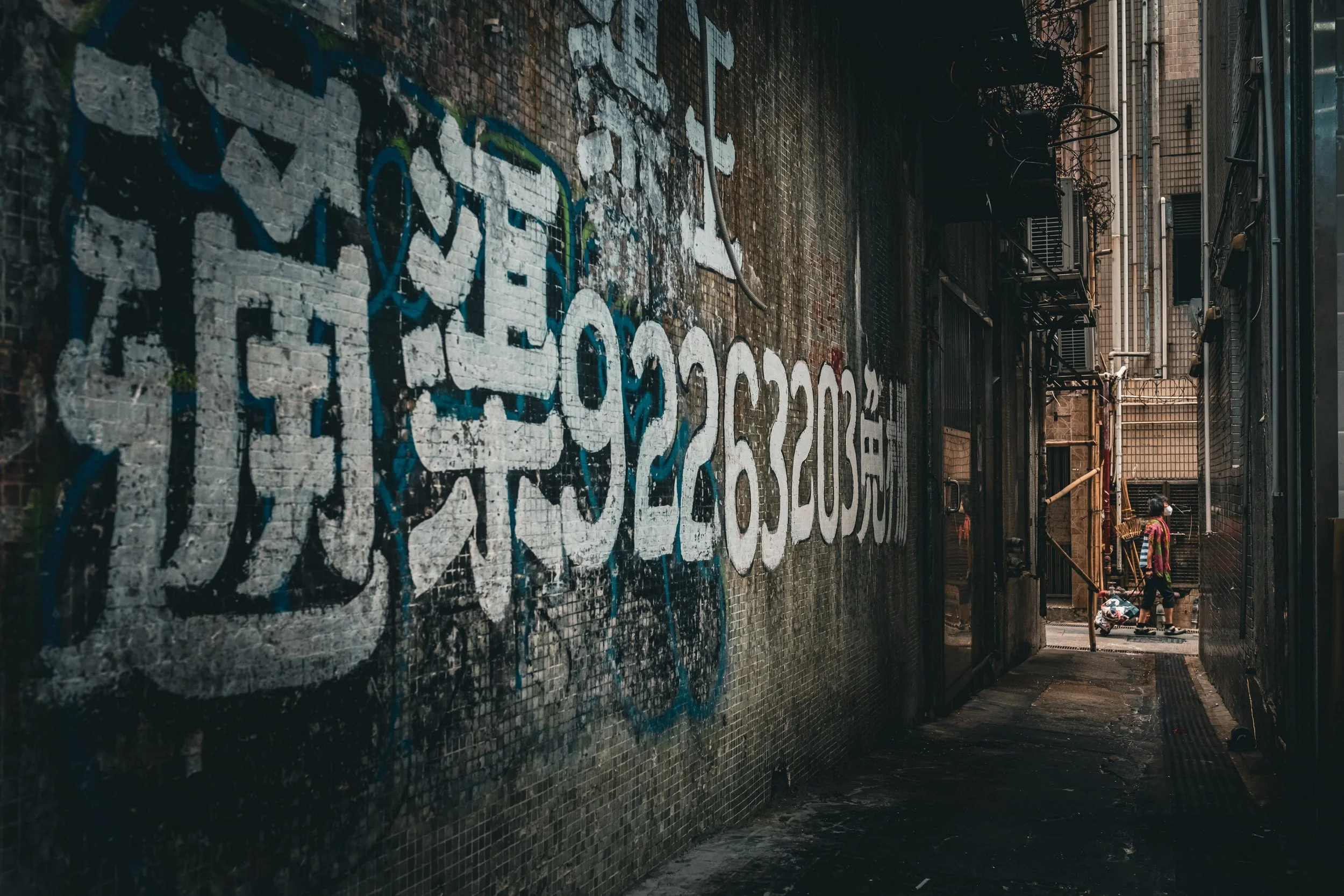
These back alleys are the city's circulatory system, narrow arterial corridors where the unglamorous but essential labor of urban life happens in plain sight while somehow remaining completely invisible. Most residents and nearly all visitors move through Hong Kong without ever really seeing these spaces or the people who inhabit them. City councils would prefer to erase them entirely, or at least keep them hidden behind whatever barriers can maintain the illusion of seamless urban perfection.
But I've become fascinated by these forgotten places, by the workers and rhythms and weathered textures that define them. Over the past several months, I've spent time documenting these alleys and the people whose lives unfold there, because if nobody's watching, then these spaces and these workers might as well not exist at all.
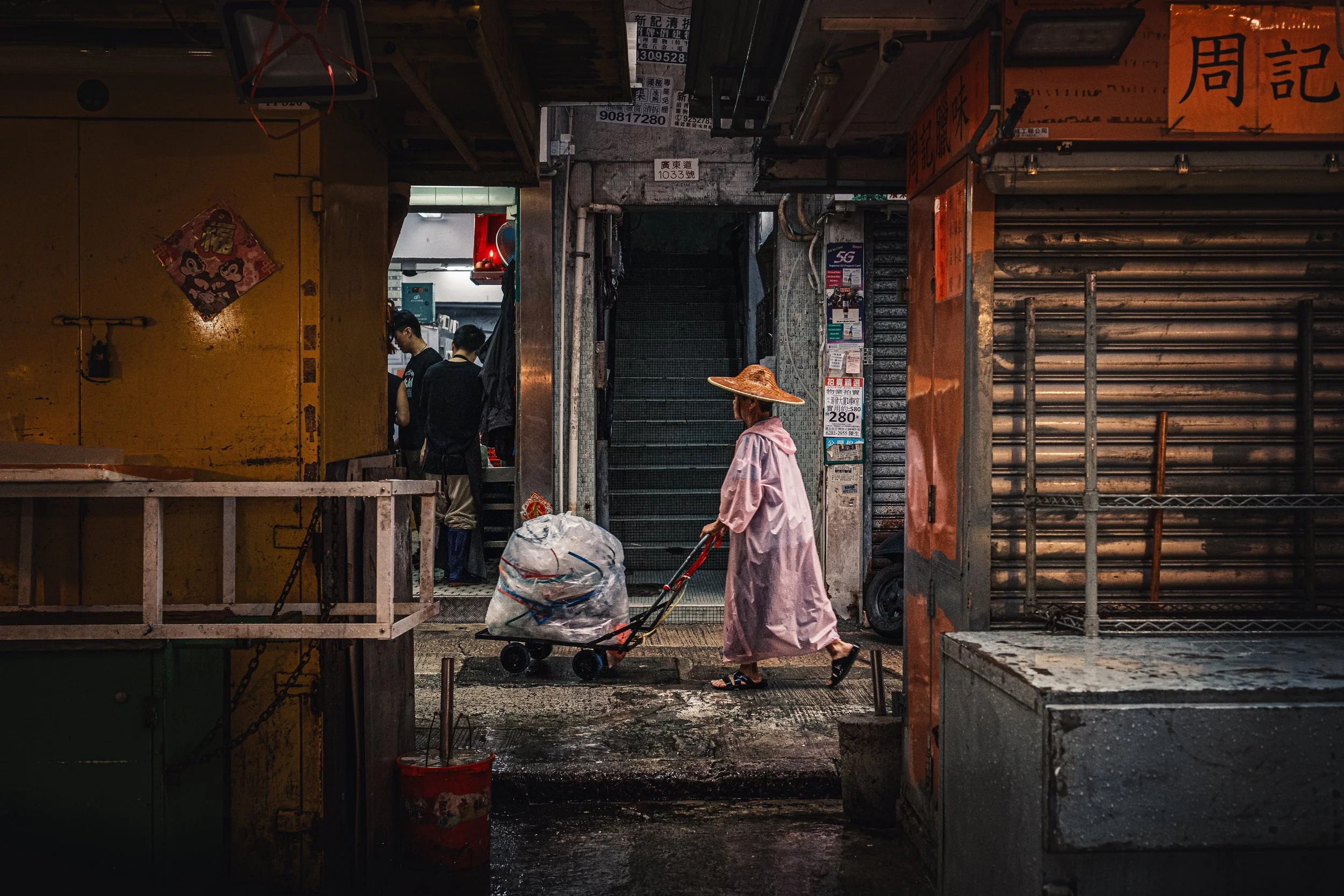
The Morning Ballet
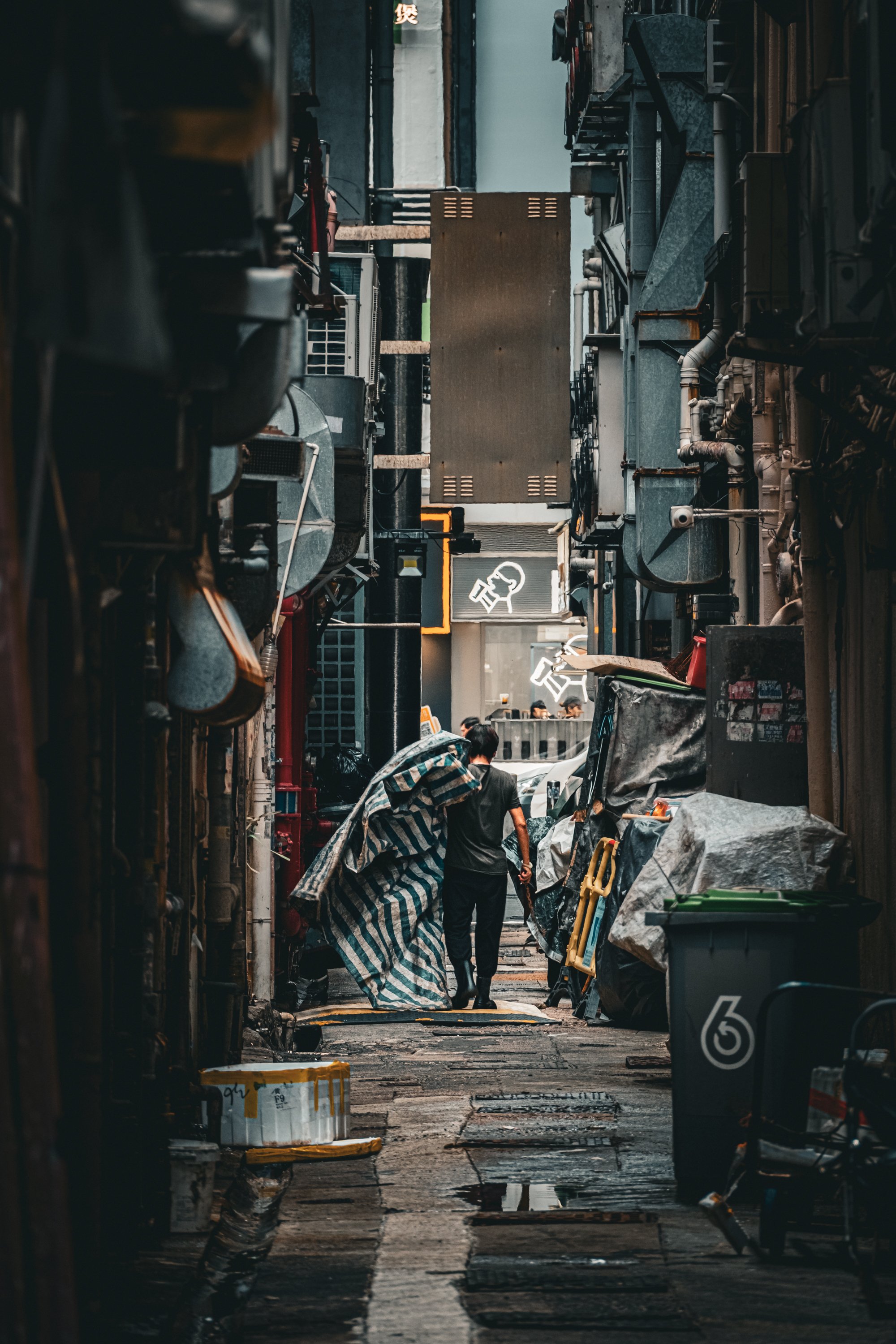
If you can get yourself into one of these alleys early in the morning you'll witness something that resembles a well-oiled machine, though nobody seems in charge or running and maintening it.
Restaurant deliveries arrive in waves, trucks backing into impossibly narrow lanes while drivers shout instructions to each other in Cantonese. Workers know exactly how many boxes they can stack before the pile becomes unstable, exactly how to angle a hand truck through a doorway that seems six inches too narrow, exactly how long they have before the next truck arrives and they need to clear space.
It's a system built on repetition and necessity, refined over years into something that works despite looking like barely controlled chaos to anyone unfamiliar with its logic.
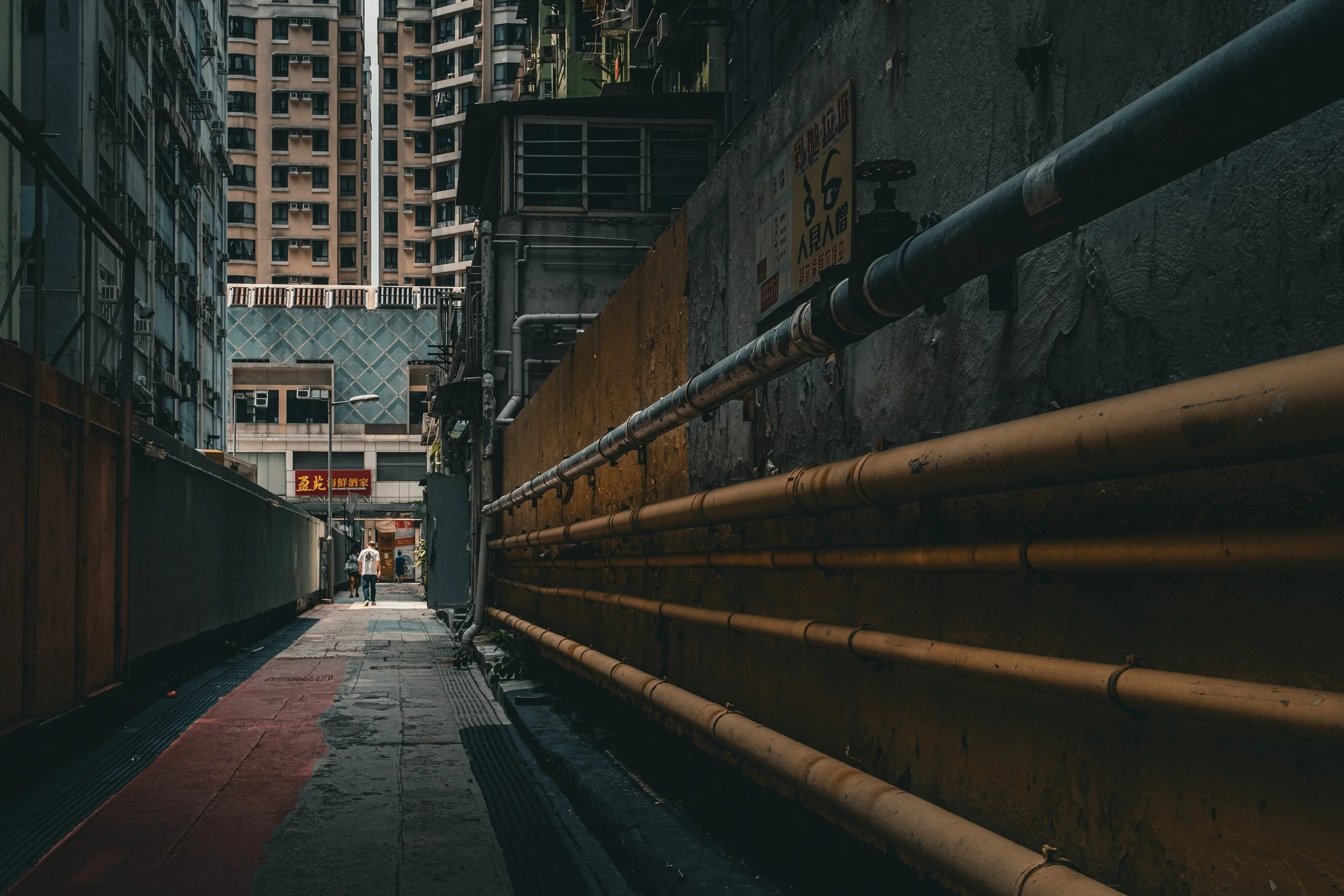
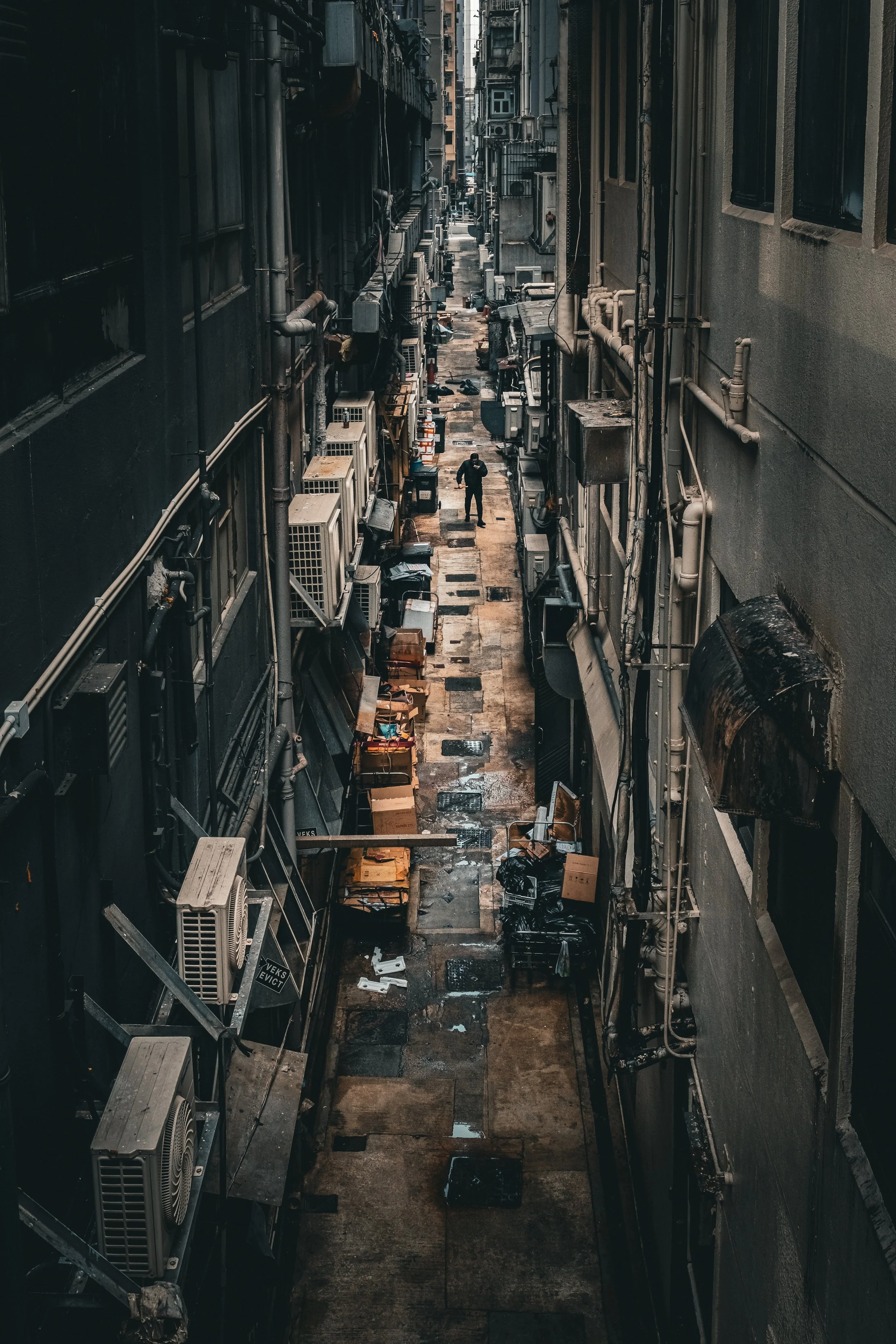
The In-Between Hours
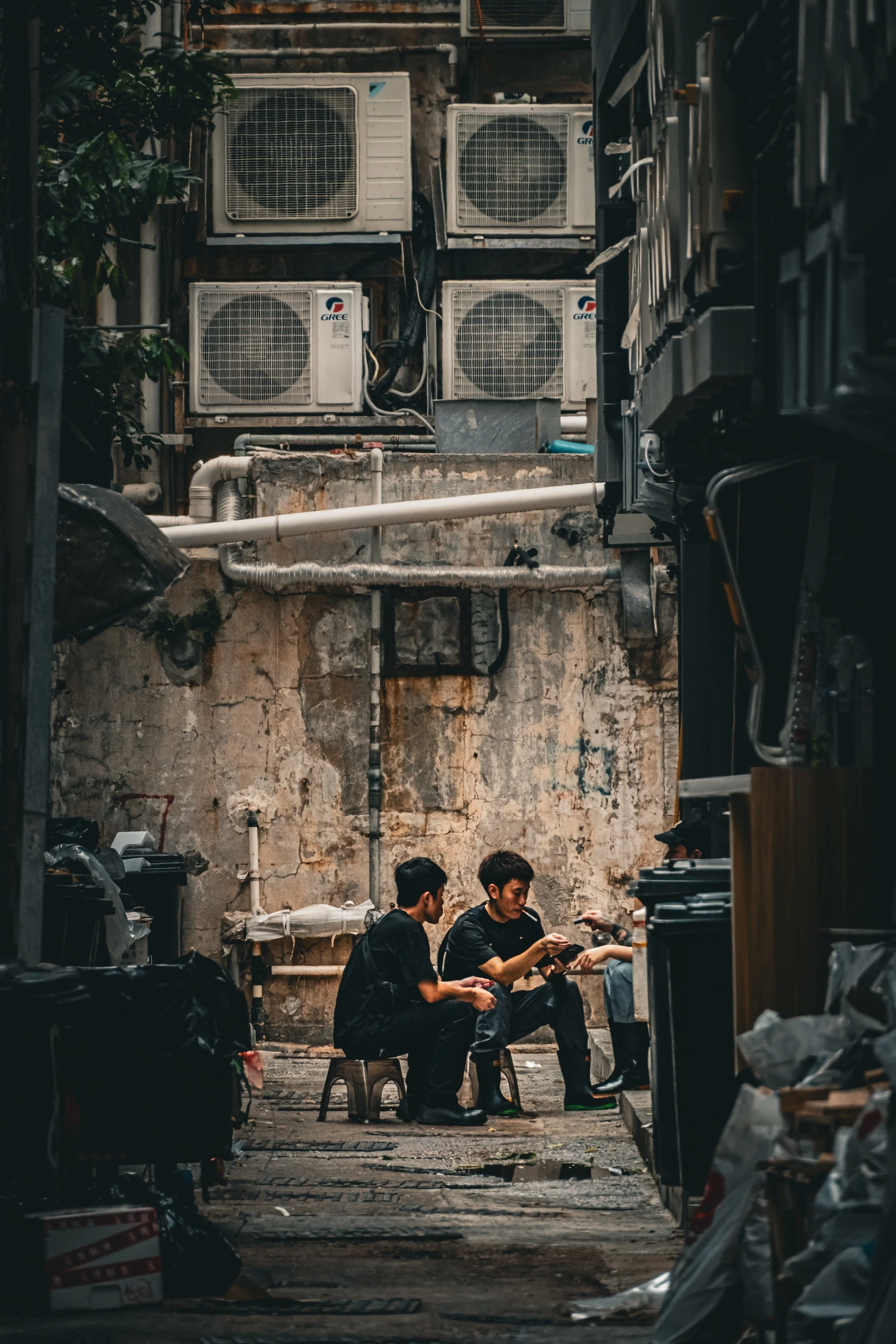
Later in the day, these spaces take on a different character. By mid-afternoon, when restaurants have finished their lunch service and haven't yet started preparing for dinner, the alleys become break rooms for workers who don't have actual break rooms to go to.
Waiters lean against walls smoking cigarettes, scrolling through their phones, talking with the kind of casual intimacy that comes from spending ten hours a day in close proximity to the same people. Kitchen staff sit on overturned buckets eating staff meals from plastic containers. Delivery drivers catch fifteen-minute naps in their trucks, engines off, windows down to let whatever breeze exists find its way inside.
These are stolen moments of rest in jobs that don't provide much space for rest. The alleys offer something that the polished front-of-house areas don't: a place where you can exist without performing amd where nobody expects you to smile or be efficient or maintain the service-industry fiction that you're happy to be there. You can just be tired, just be hot, just be a person taking a break from work that's physically demanding and chronically undervalued.
I've photographed these moments, there's something honest about them, something that feels worth documenting precisely because they're so ordinary and so universal. Everyone who works needs these pauses, these breaths between exertion, but most of us get to take them in places designed for that purpose rather than in old humid alleys.
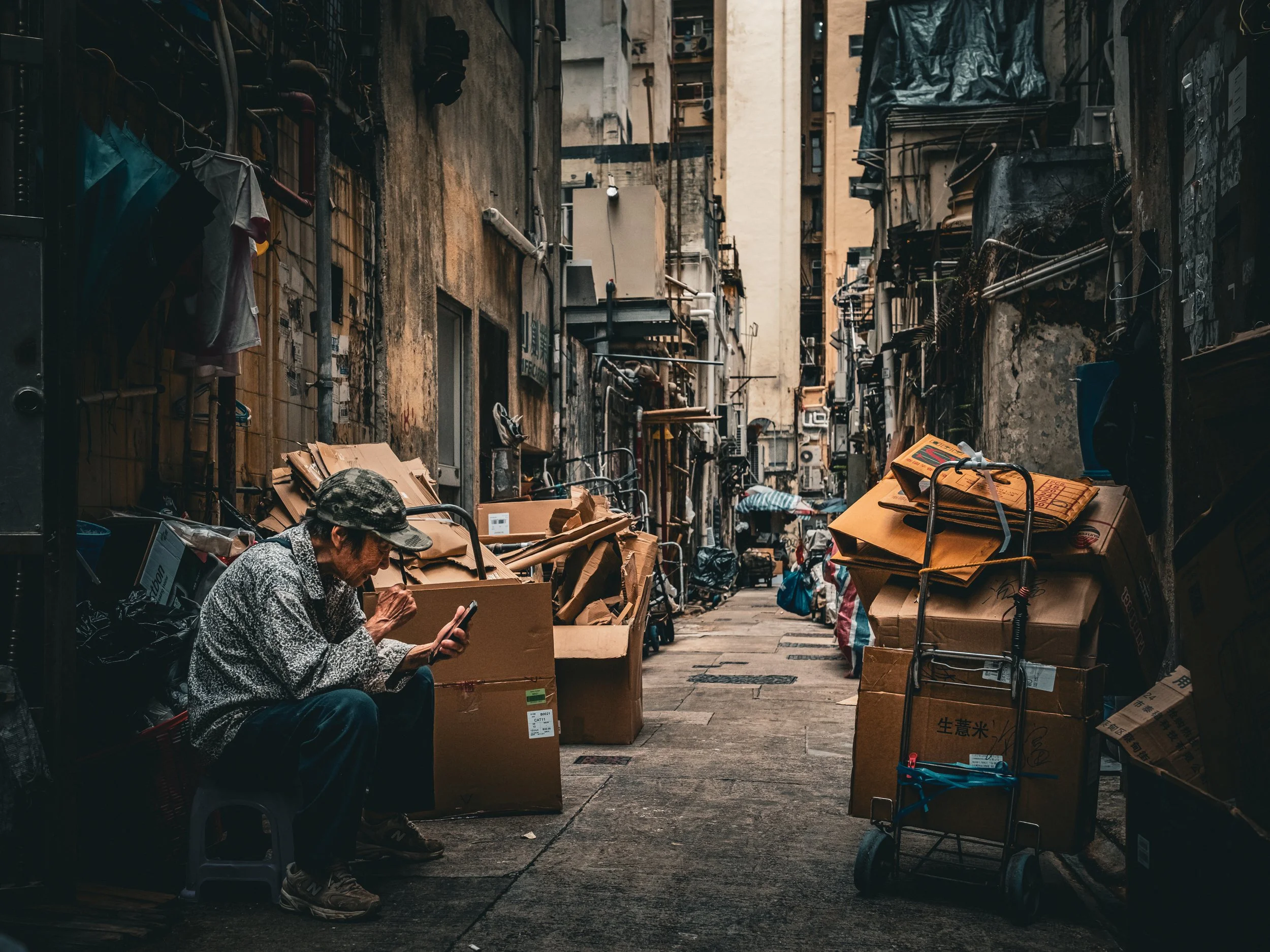
The Army Nobody Sees
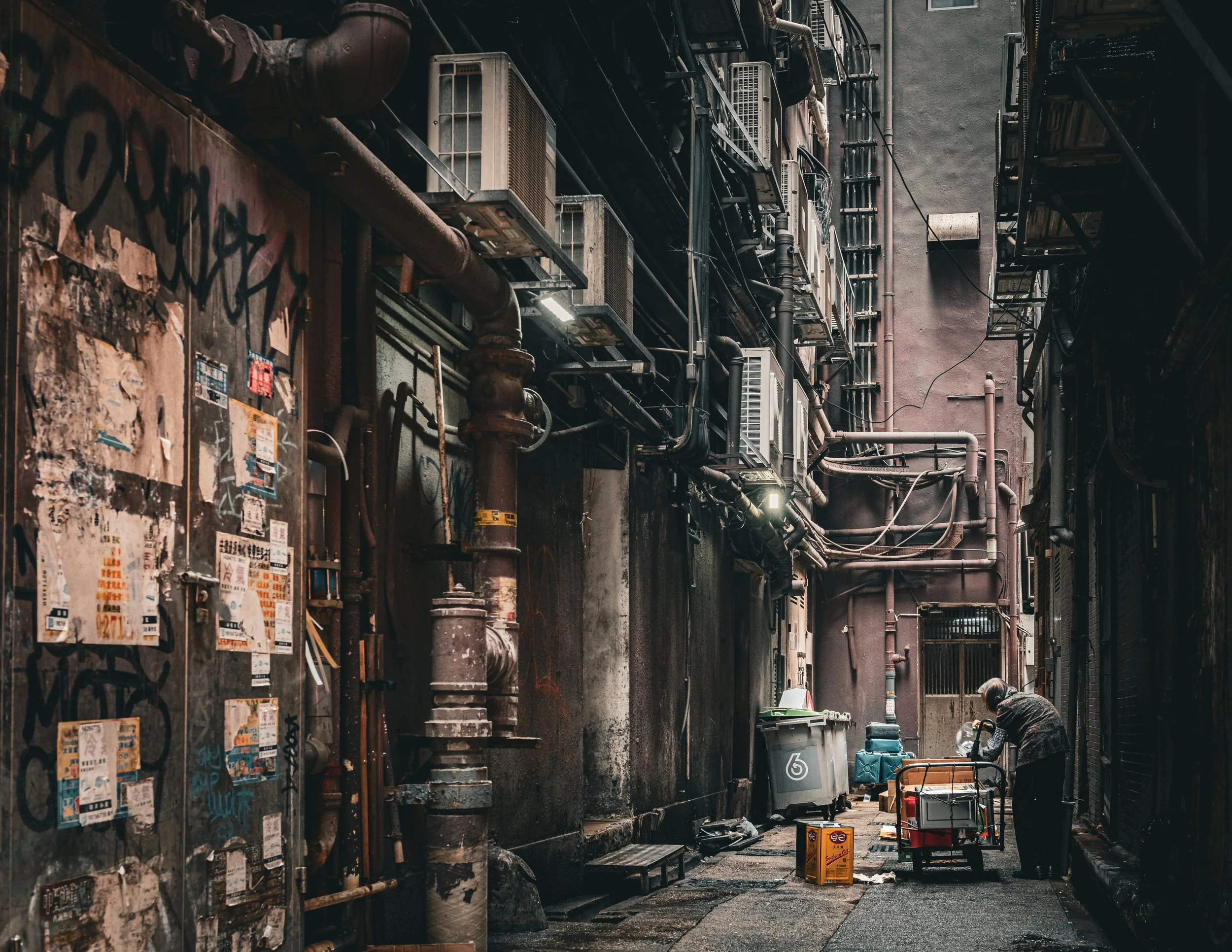
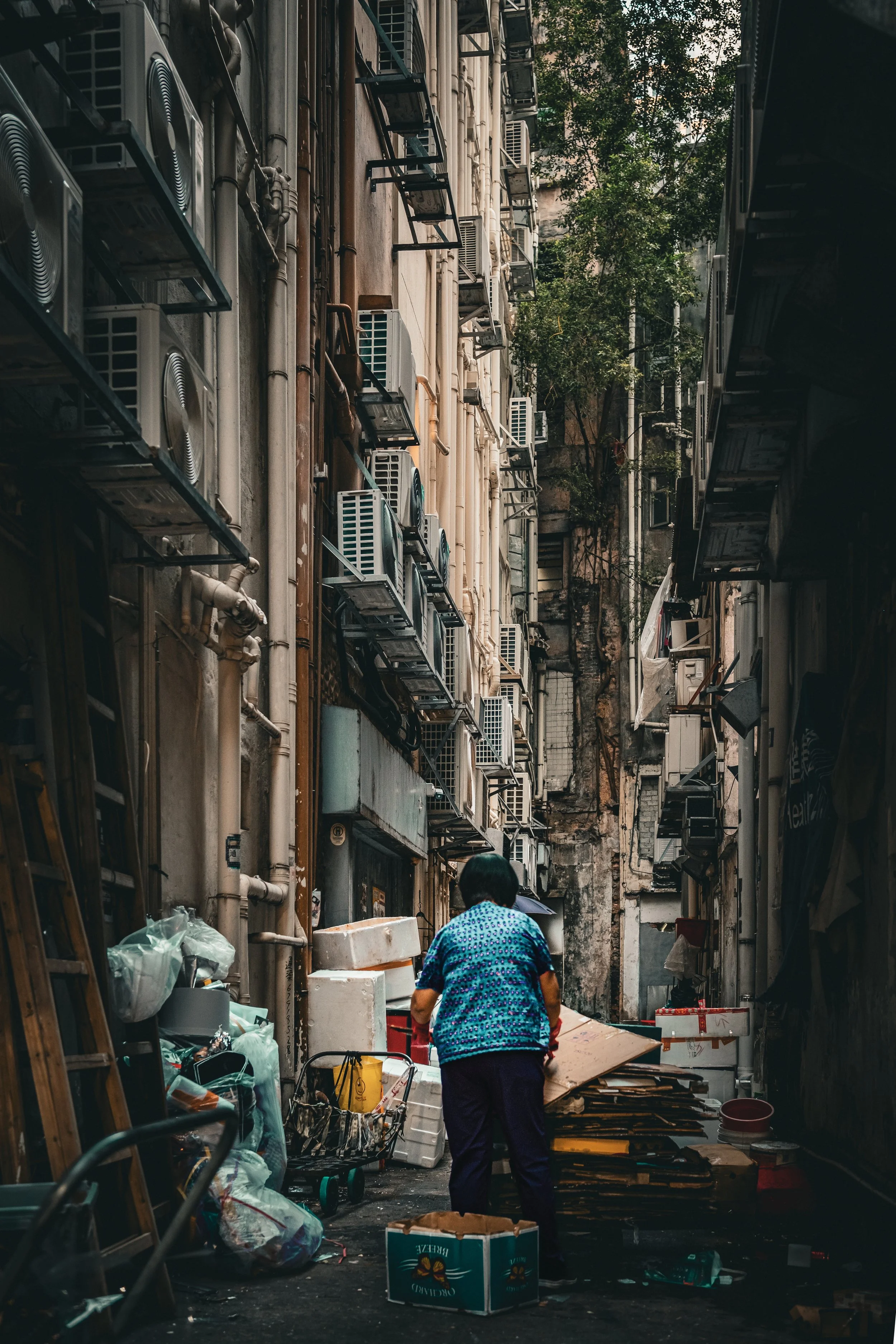
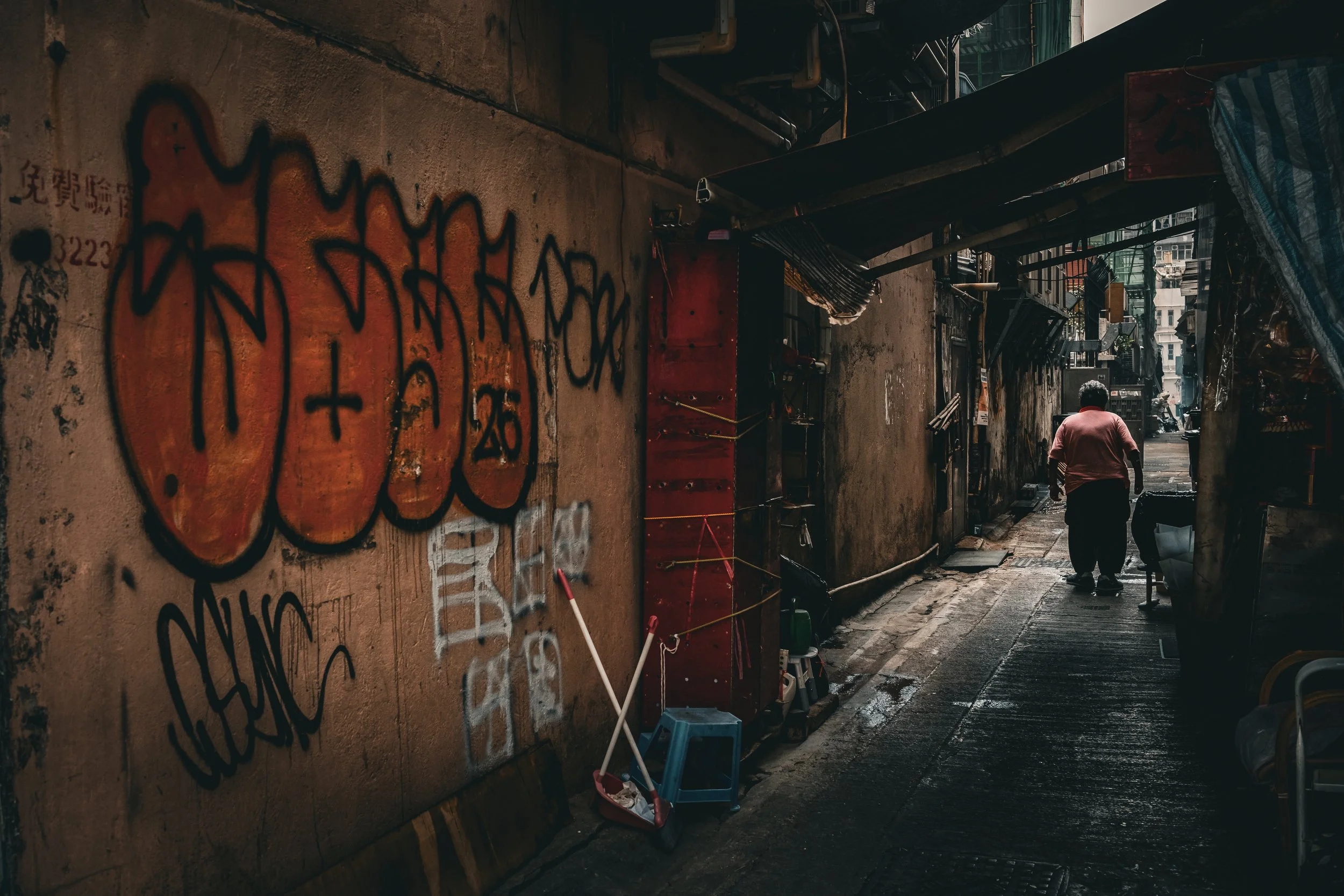
Then there are the cleaning workers, the people whose job is to manage the endless tide of waste that a city of seven million produces every single day. By late afternoon and into the evening, the alleys fill with industrial waste bins and stacks of cardboard boxes, mountains of plastic bags and food waste and all the material residue of urban consumption.
The workers who handle this are overwhelmingly older, often women, doing physically demanding labor for wages that barely cover Hong Kong's notoriously expensive cost of living. They sort recycling, compress cardboard, hose down areas that have become too rank to ignore. They're the reason the front-facing city stays clean, the reason tourists can walk through Central or Causeway Bay without seeing or smelling the waste that their presence helps generate.
These workers are the real heroes of urban life. They're not performing extraordinary acts of courage or sacrifice, they're just doing necessary work that keeps the city functional, doing it consistently and without recognition, in conditions that most people would find unpleasant at best and unbearable at worst.
Without them, the clean city we take for granted would drown in its own waste within days. The rats would emerge from wherever they hide during the hours when Hong Kong pretends to be pest-free. The smell would become impossible to ignore. The illusion of urban order would collapse almost immediately.
But they do their work, shift after shift, so the rest of us can maintain our distance from the material reality of city life. We throw things away and they disappear, which is as close to magic as infrastructure gets. Except it's not magic, it's labor, performed by specific people in specific places that we've collectively agreed not to look at too closely.
Why These Spaces Matter
I started photographing these alleys because I was interested in texture and light, in the visual qualities of weathered walls and stacked boxes and the particular way afternoon sun filters into narrow urban canyons. But the project became something different as I spent more time in these spaces, as I started to recognize the same faces and understand the rhythms that govern these forgotten corridors.
What I found was an entire parallel city existing just meters away from the Hong Kong that everyone sees and photographs. While tourists crowd the Mid-Levels Escalator and businesspeople hurry through air-conditioned shopping malls, these alleys maintain their own separate reality, their own population, their own social structures and hierarchies.
The workers here know each other in ways that people in the front-facing city rarely do. They share cigarettes, complain about bosses, help each other lift heavy loads. They don’t need to wear a mask imposed by society, they can live and be themself, find a moment of intimacy in a city where space comes at a premium.
These are also spaces where Hong Kong's inequality becomes visible in ways the city usually manages to obscure. The gap between the gleaming towers above and the grimy alleys below isn't just aesthetic: it's economic, social, existential. The people who work in these alleys often can't afford to live in the neighborhoods they serve, can't afford the products sold in the stores whose waste they clean up.
But if you only ever see the front-facing city, if you only photograph the skyline and the harbor and the famous viewpoints, you miss this entire dimension of how Hong Kong actually functions. You get a version of the city that's been curated for consumption, designed to be photogenic and unthreatening, scrubbed clean of anything that might complicate the narrative of prosperity and efficiency.
A Dedication
This serie is dedicated to the people who live and work in these forgotten alleys, the delivery drivers and kitchen workers and cleaning staff who keep Hong Kong running while remaining invisible to most of the city's residents and visitors. They don't wear capes, they don't get recognition, and most people don’t see them, but some of us are still watching,
Bertrand Renaud is an award-winning French photographer based in Hong Kong. His work focuses on street photography and landscapes across South China.

