The Green Valley: Finding China's Timeless Countryside
There's a version of rural China that lives in our collective imagination: quiet villages tucked into green valleys, farmers tending their fields, ancestral halls standing witness to centuries. Most people assume it's been paved over, swallowed by the gray sprawl of development.
I found it an hour outside Leiyang, a city in south Hunan
The Road Out
We arrived by high-speed train in Leiyang, a fourth-tier city of a million people in Hunan Province. The city itself, rough around the edges, functional, humming with industry, is a story for another time. What struck me first was the road leading out toward the suburbs: concrete, dust, construction, everything rendered in shades of gray.
But then, without warning, the car turned…
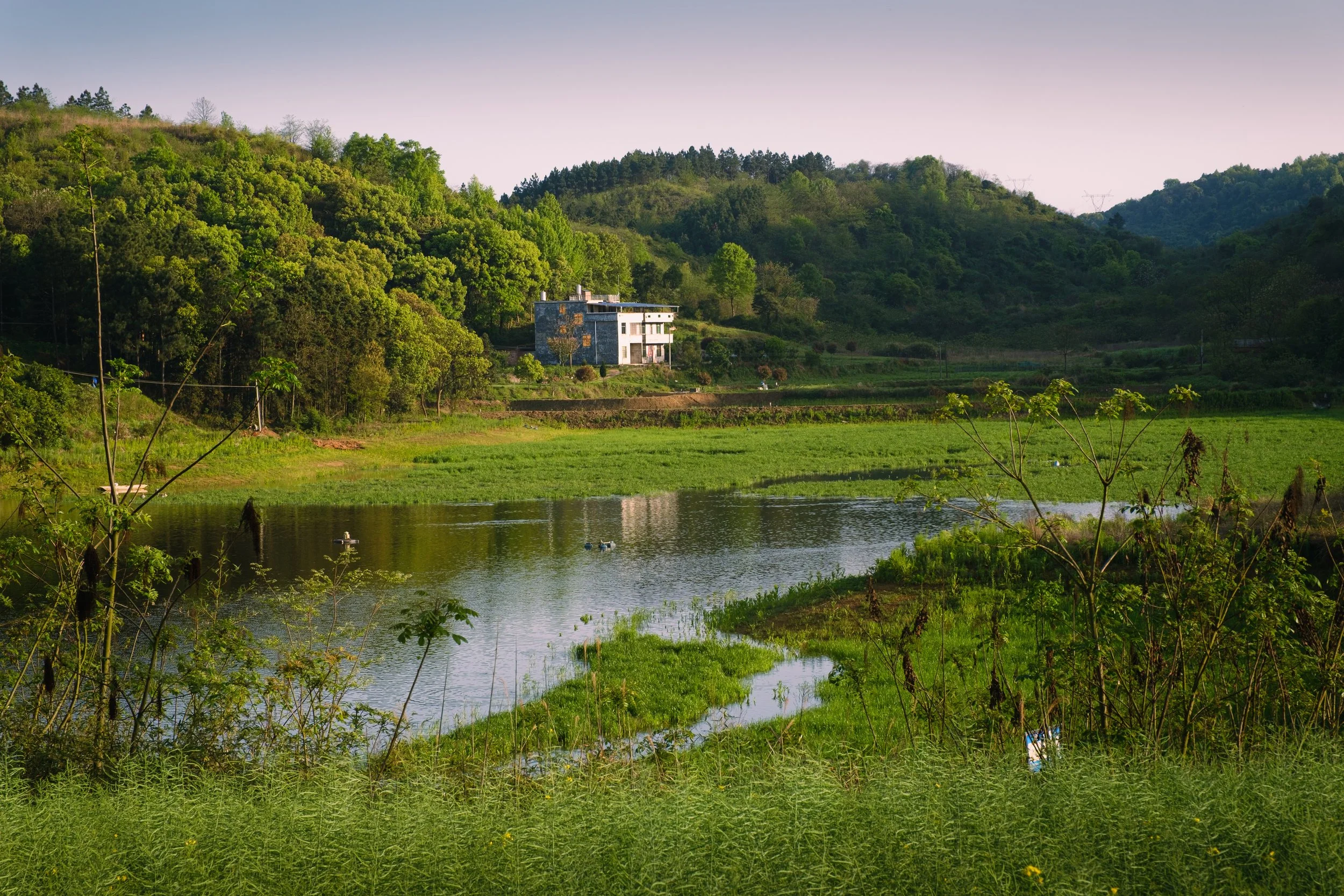
It was like crossing a threshold into another world. The gray gave way to green and to the vivid colors of spring in southern China. Hills rose on either side, fields carved into their slopes, and the midday sun poured golden light across the valley floor. Within minutes, we arrived at my family's village.
A Place Out of Time
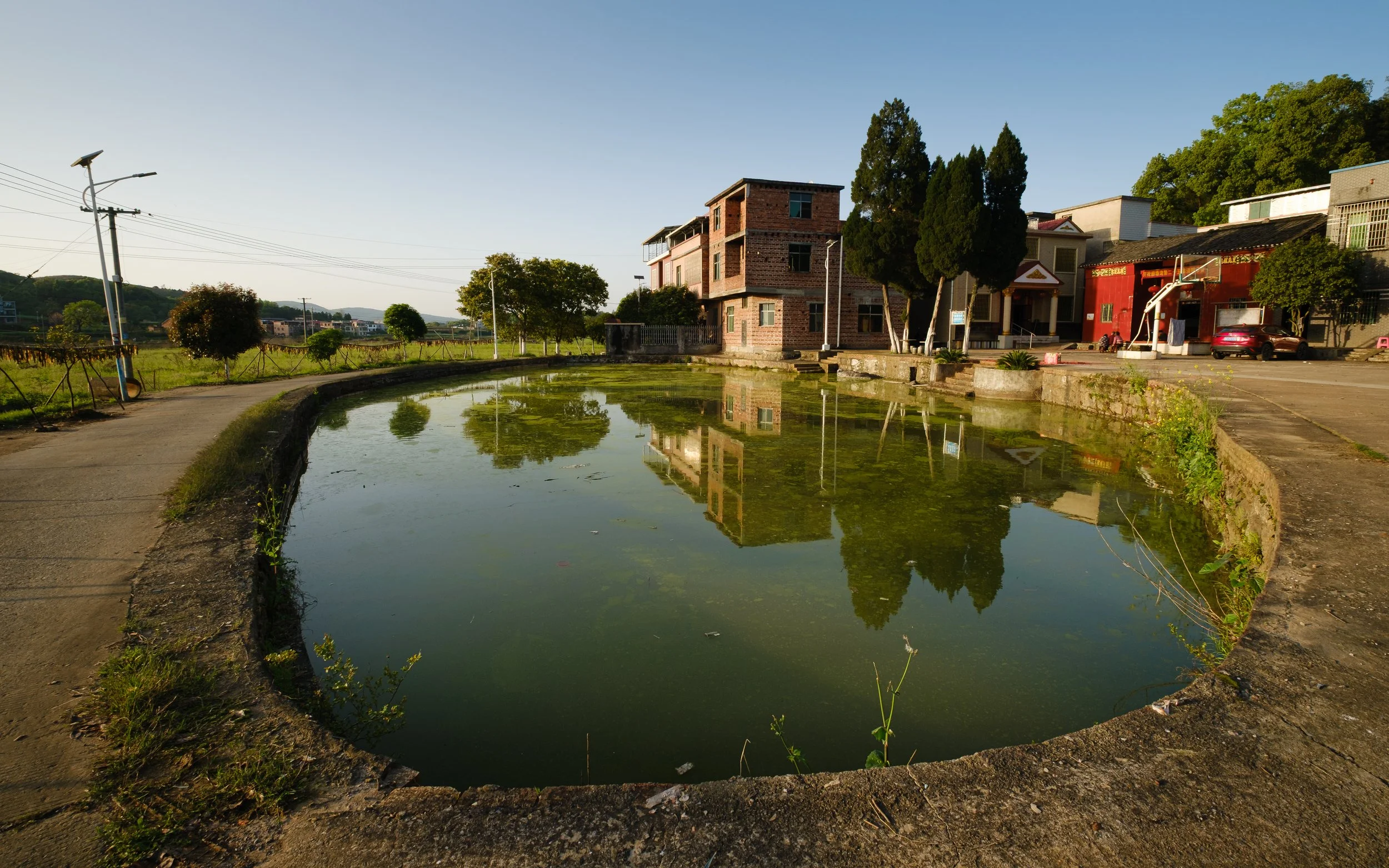
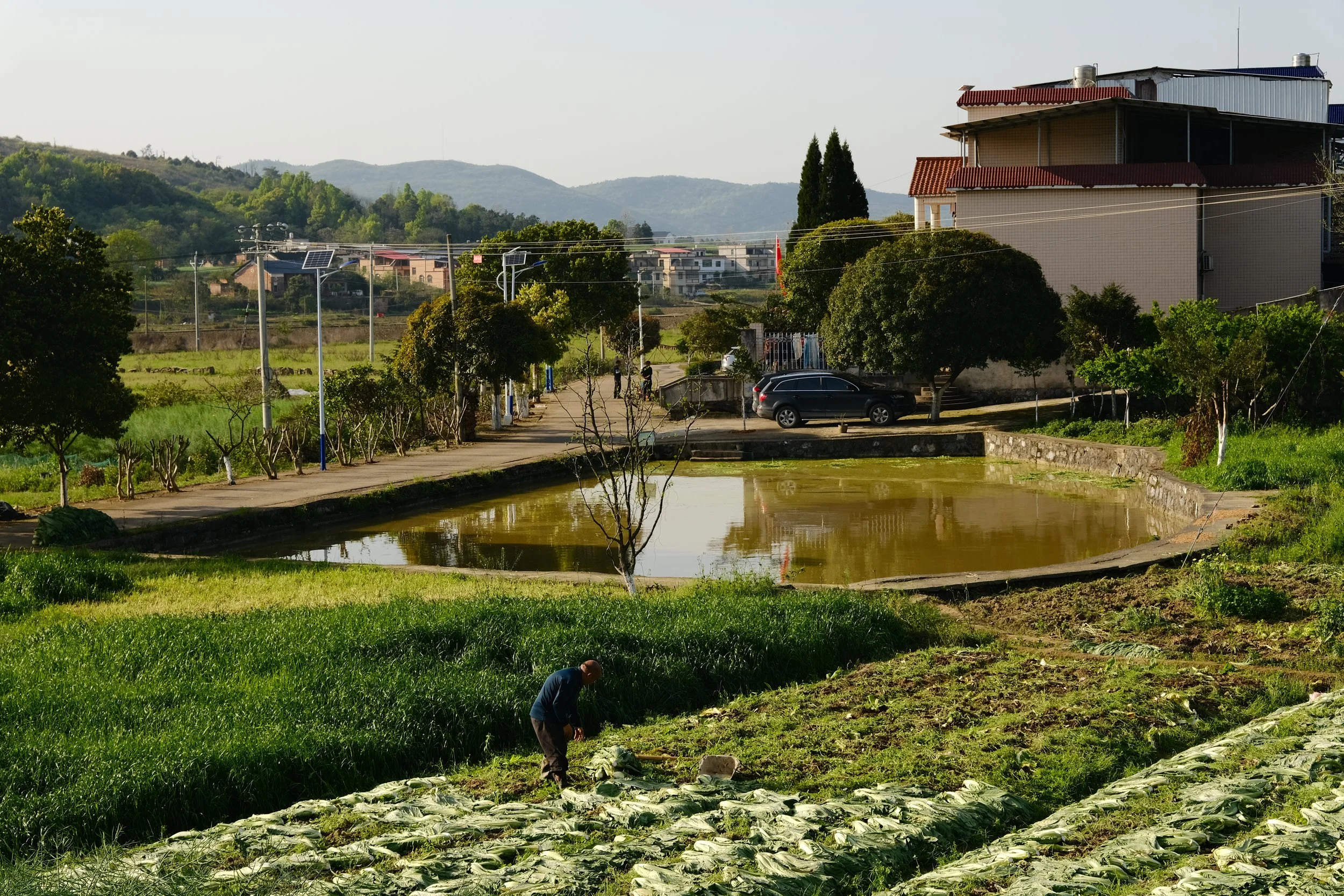
This wasn't a village in the way tourists think of villages, no quaint boutiques or carefully preserved heritage sites. This was a working hamlet, home to fewer than a hundred people, where life moved at the rhythm of the seasons and the river that cut through the valley.
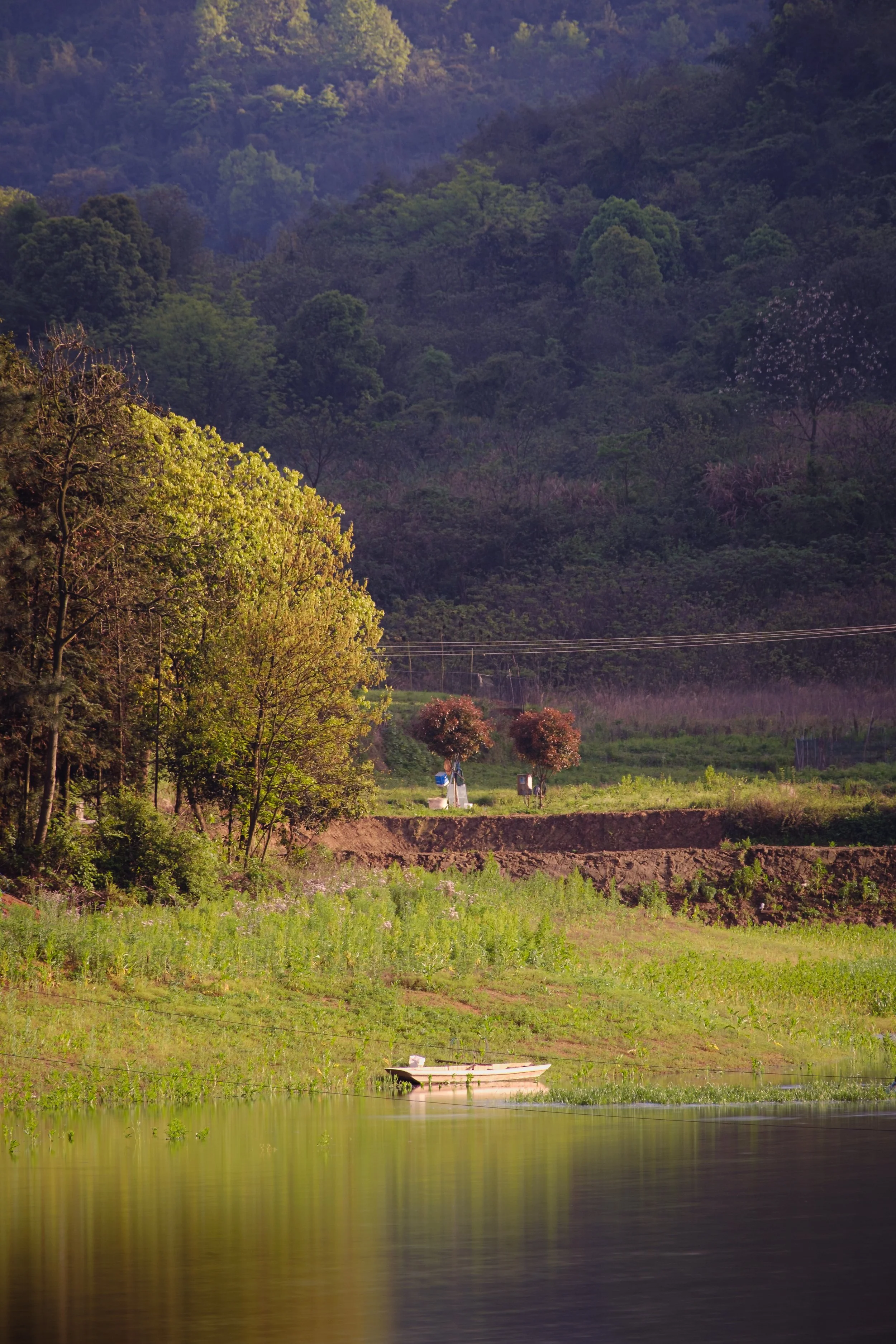
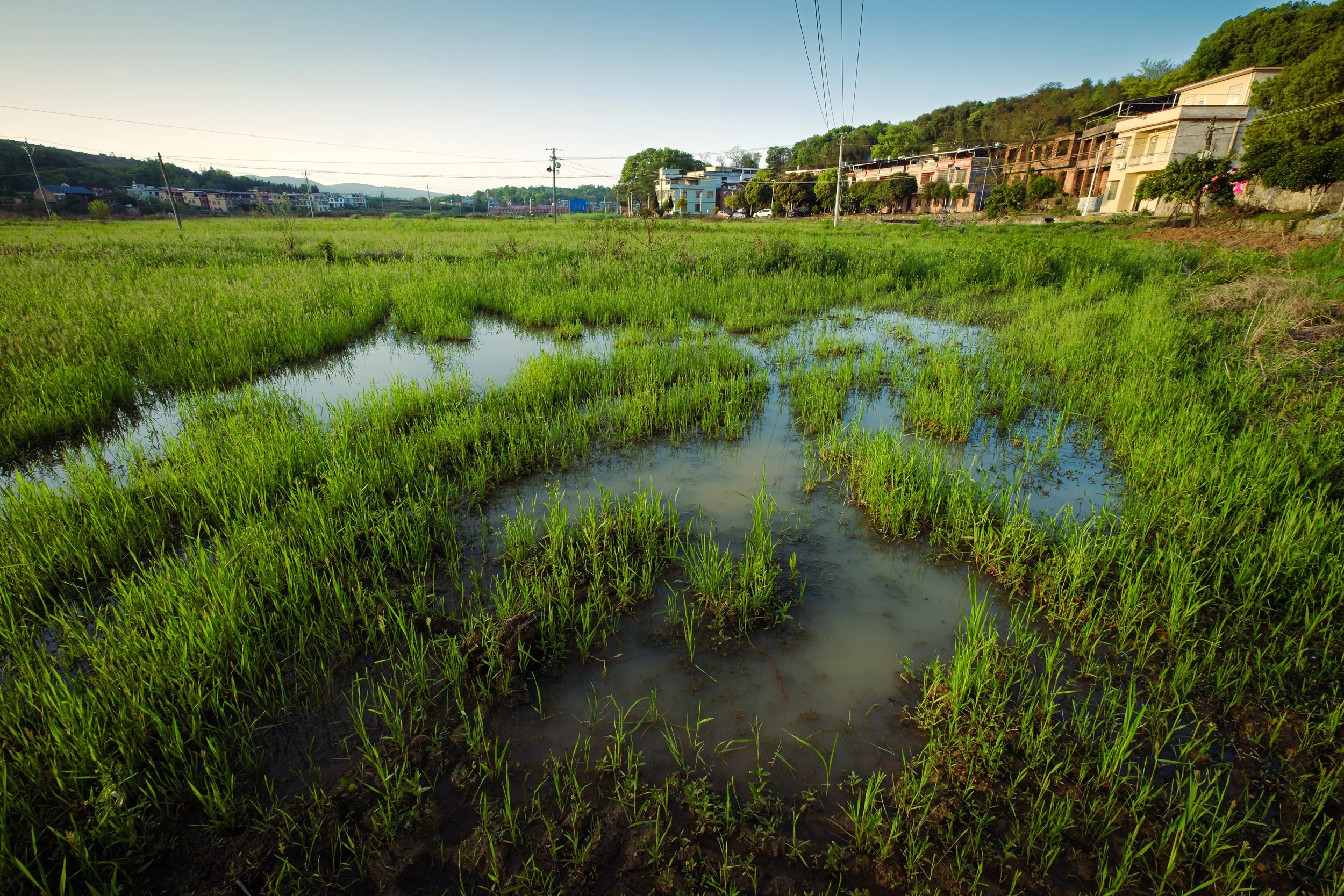
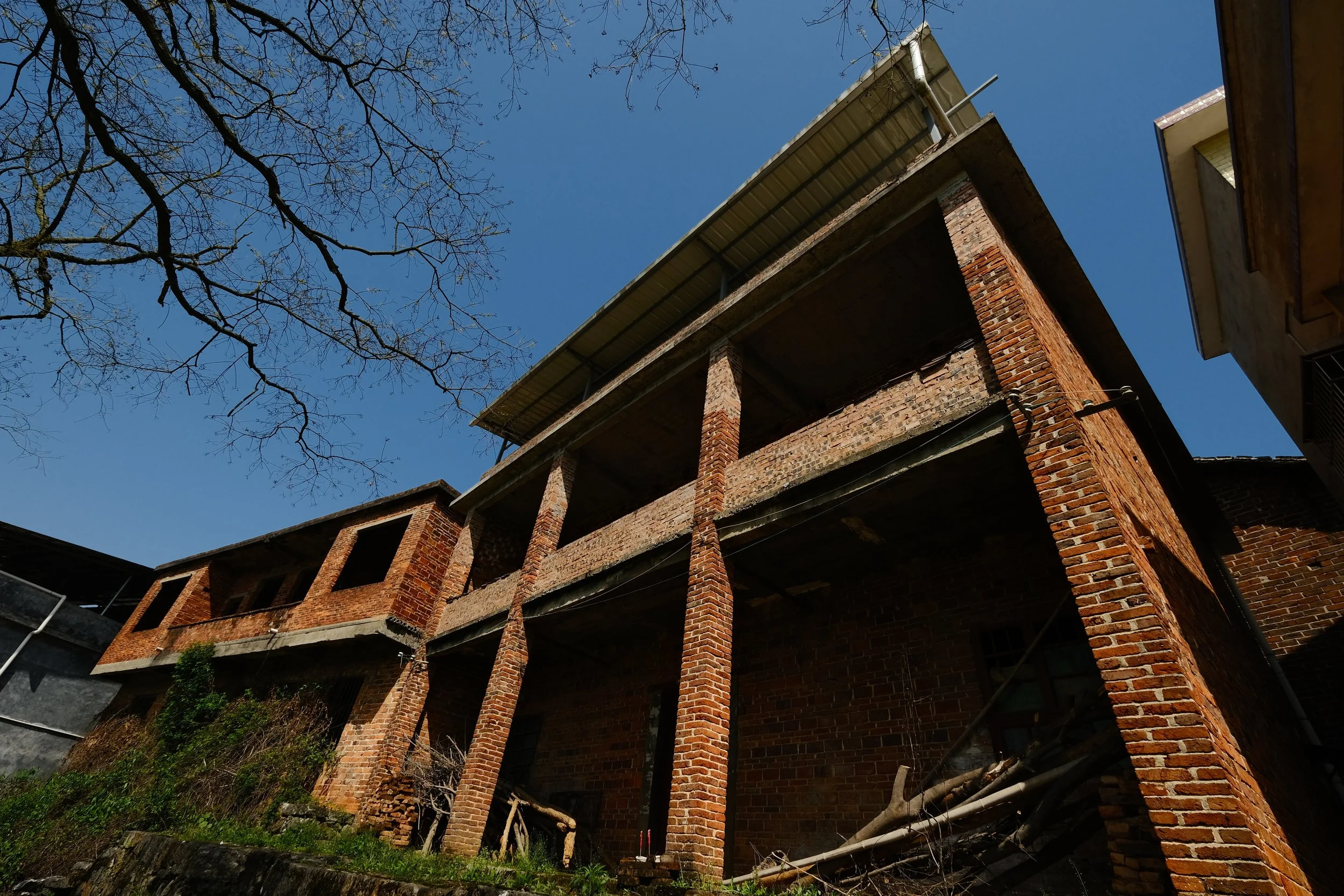
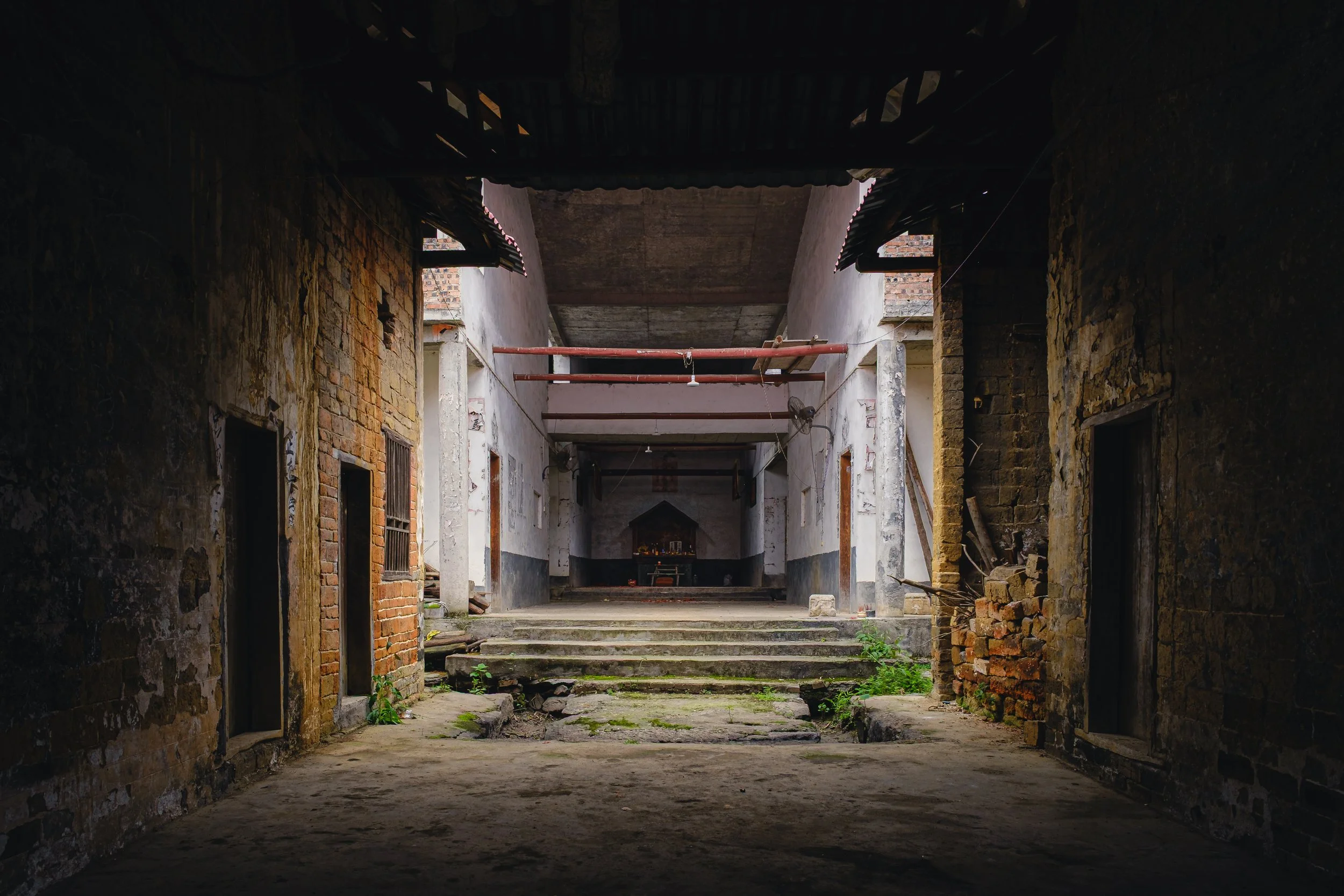
The houses were simple, some still built with red brick, their design unchanged for decades. Some had courtyards open to the sky, others leaned slightly, softened by time and weather. Between the villages, narrow gravel roads wound through patchworks of crops and fish ponds, their still surfaces reflecting the hills beyond.
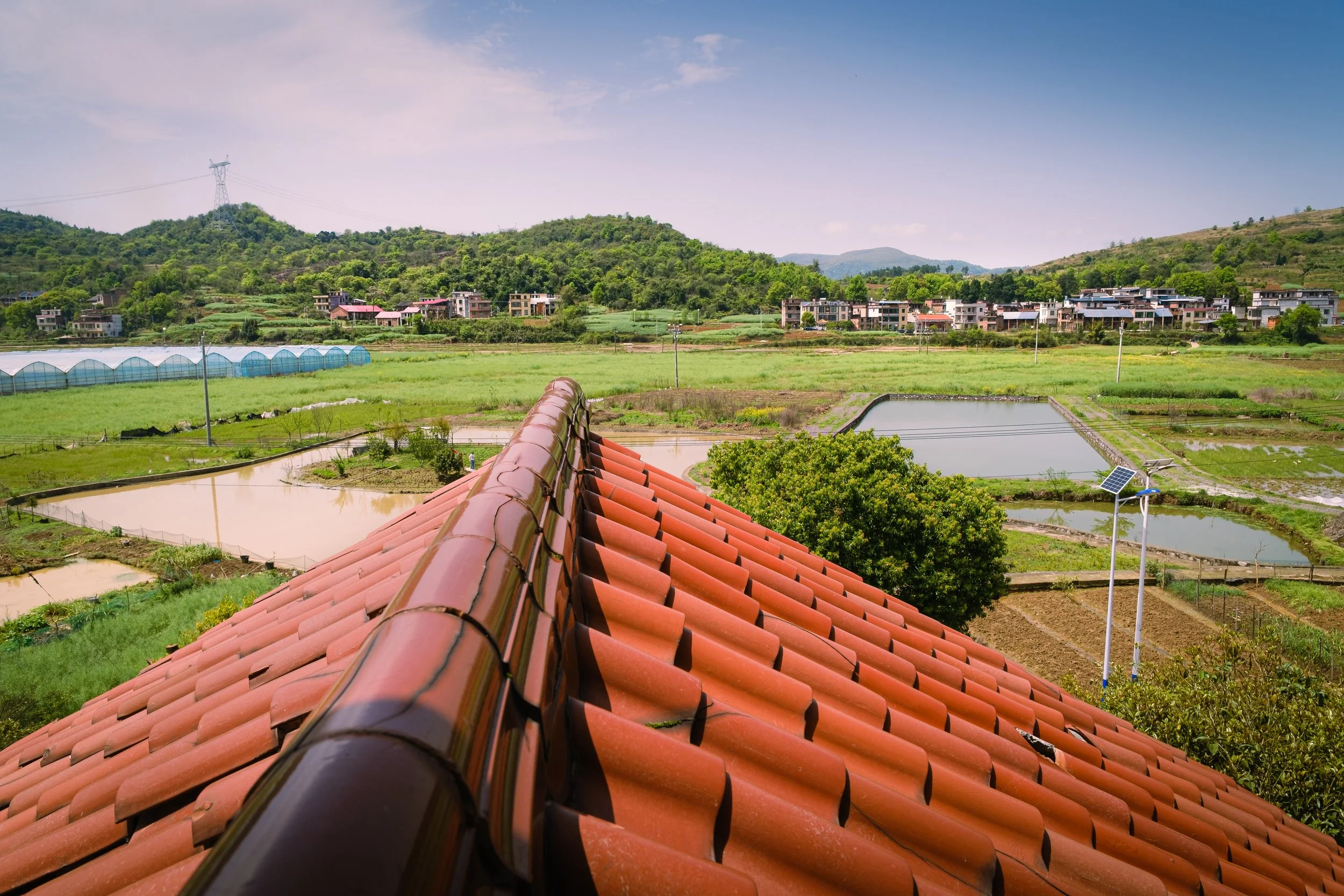
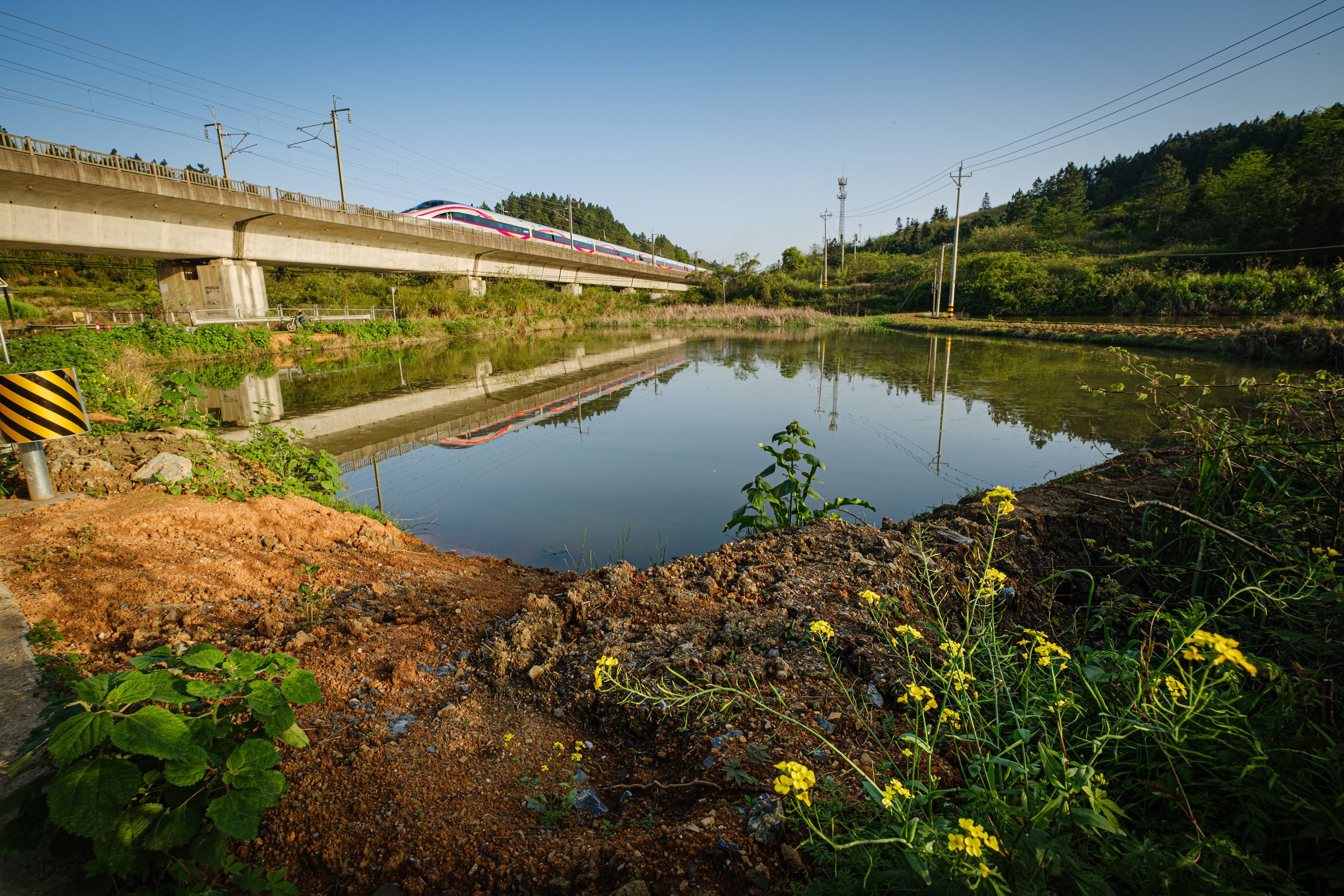
I climbed to the top floor of our family house, looking out over the valley. Rice paddies, greenhouses, a small boat resting by a pond. In the distance, a high-speed train sliced across an elevated track, a flash of modernity against the timeless landscape. The contrast wasn't jarring, it was a reminder that both worlds exist, side by side, in ways we don't always expect.
The Rythm of Simplicity
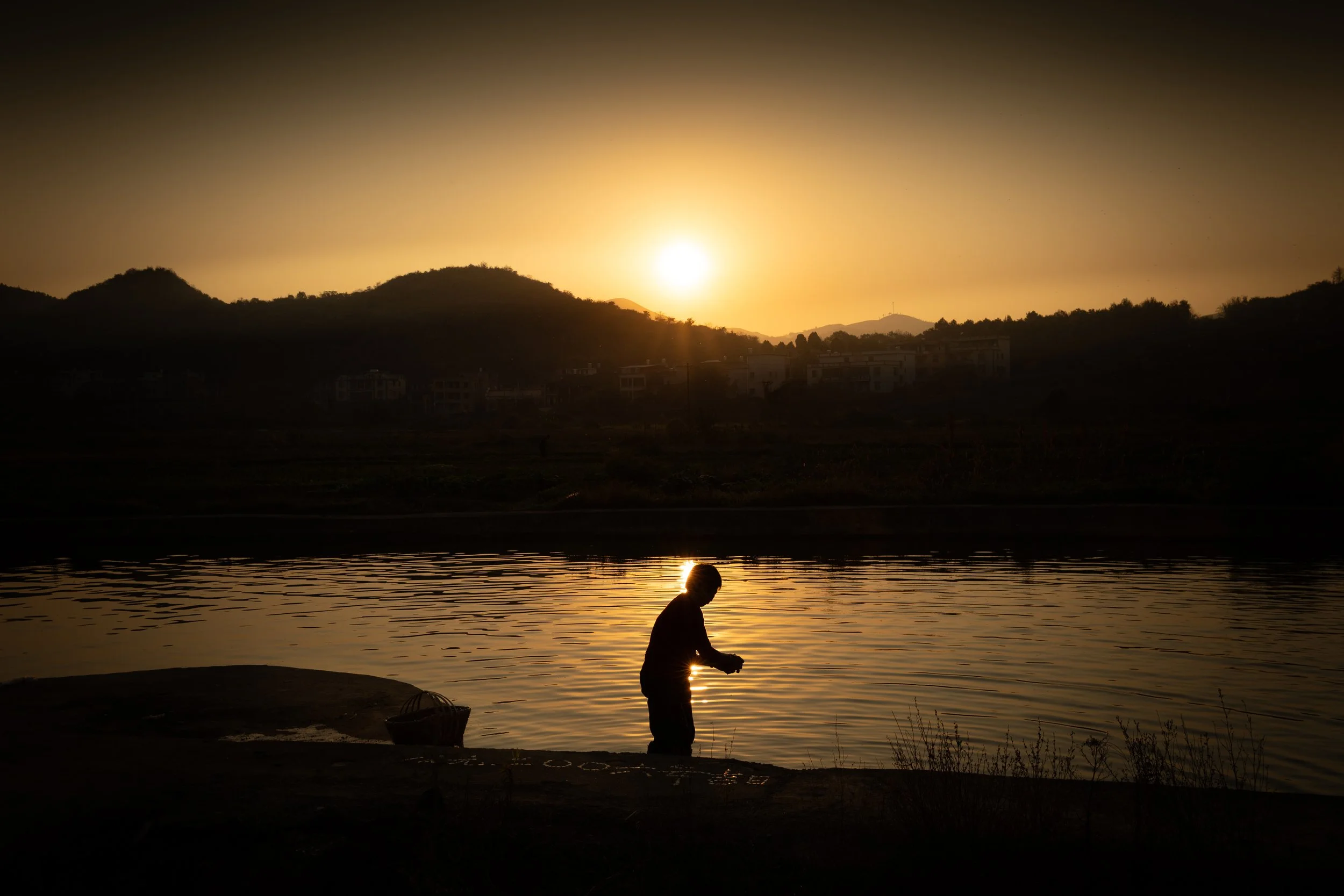
Life here operates on a different frequency. There's no rush, no urgency pulling you from one moment to the next. People rise with the sun, tend their fields, gather in the shade to talk. If you walk past a house, you'll be invited in for tea. If you stay longer, there will be food.
Coming from Hong Kong, where every minute is accounted for, the quiet felt almost disorienting at first. But after a day or two, something shifted. I stopped checking the time. I started noticing things: the way light moved across the hills in the afternoon, the sound of water running through irrigation channels, the smell of wood smoke in the evening.
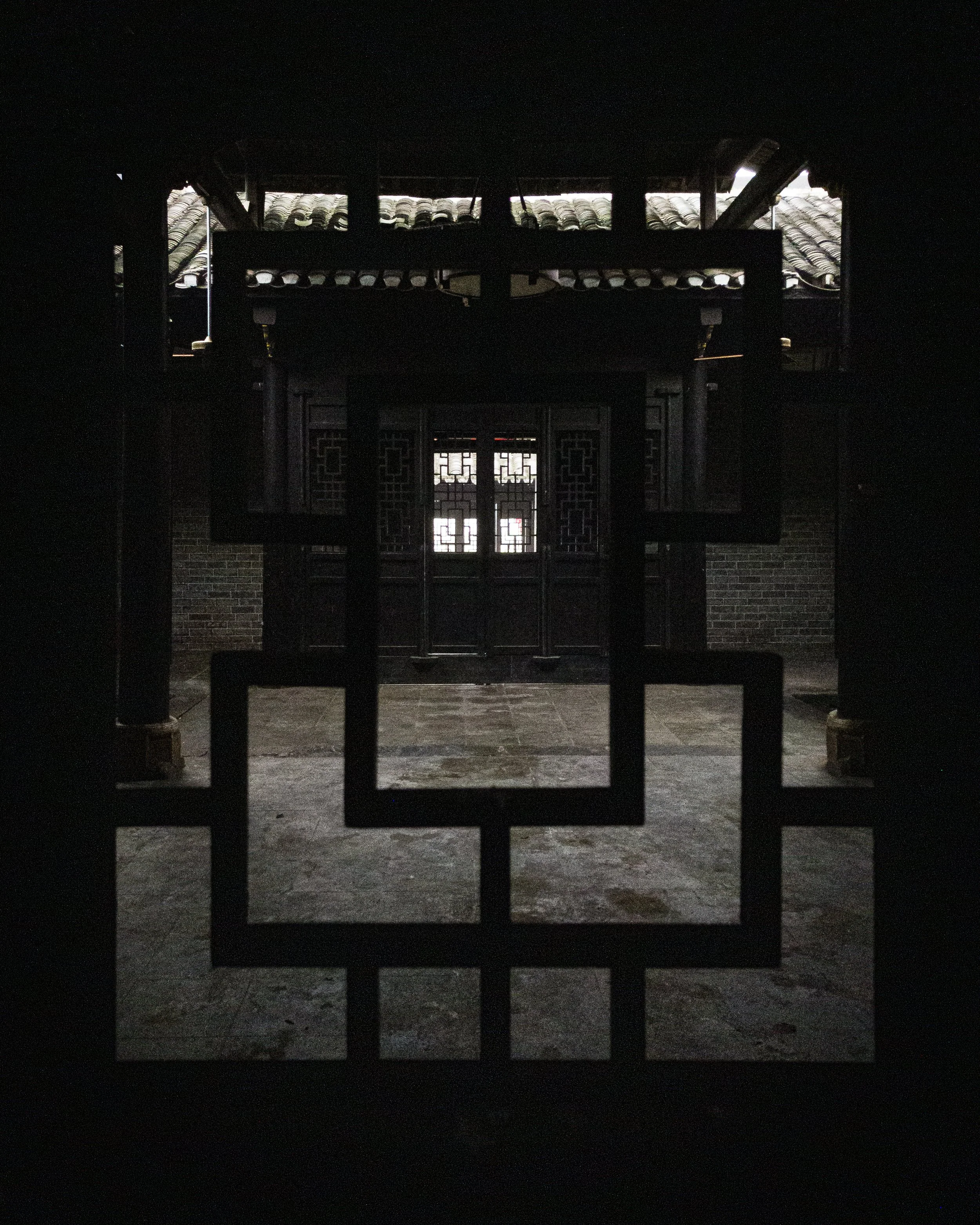
This is where I shot the images that accompany this story. Some were composed carefully, layering greens of the landscape, the symmetry of an ancestral hall. Others were pure instinct: a rooftop perspective, a reflection in a pond, light cutting through the shadow of a doorway.
Ancestral Halls: Where History Lives
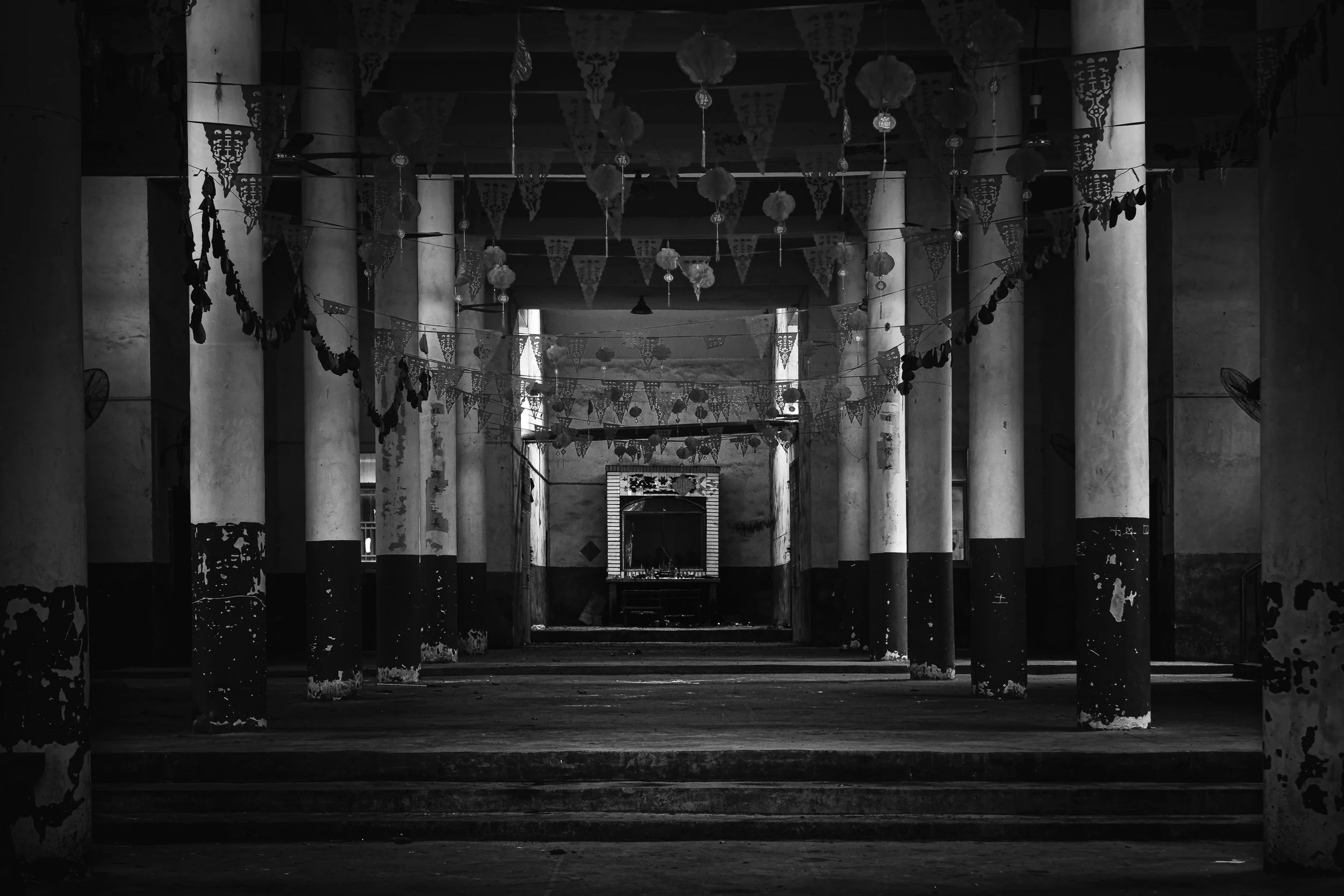
Every village in this valley has an ancestral hall, a communal gathering place where traditions are kept alive and the past is honored. Some date back to the Ming Dynasty. Others are more recent, but no less significant.
I stepped inside some halls, one at a time, finding my way through the villages of this valley I was exploring a bit more each day. The air was cool and still, light filtering through gaps in the roof where tiles had slipped. Walls were peeling, columns leaning slightly, but the structure held. Paper decorations from past festivals hung from the ceiling, their colors faded but still defiant against time.
These halls aren't museums. They're living spaces, used for ceremonies, gatherings, and the rituals that bind a community together. Standing inside one, camera in hand, I felt the weight of that continuity, the idea that generations of people have stood in the same spot, marking the same moments, keeping the same traditions alive.
Why it Matters
It would be easy to romanticize a place like this, to frame it as some kind of rural idyll untouched by the modern world. But that's not the whole story. Life here is hard. Young people leave for the cities. Infrastructure is limited. The modern world isn't absent, it's just at a different scale.
What struck me wasn't the absence of modernity, but the persistence of something older. A way of life rooted in the land, in family, in cycles that stretch back further than any one person can remember.
As a photographer, I'm always chasing moments that feel singular. But in this valley, I found something else: continuity. The knowledge that this place existed long before I arrived, and will continue long after I leave…
Bertrand Renaud is an award-winning French photographer based in Hong Kong. His work focuses on street photography and landscapes across South China.

