People & Traditions: When Qingming Brings a Village Back to Life
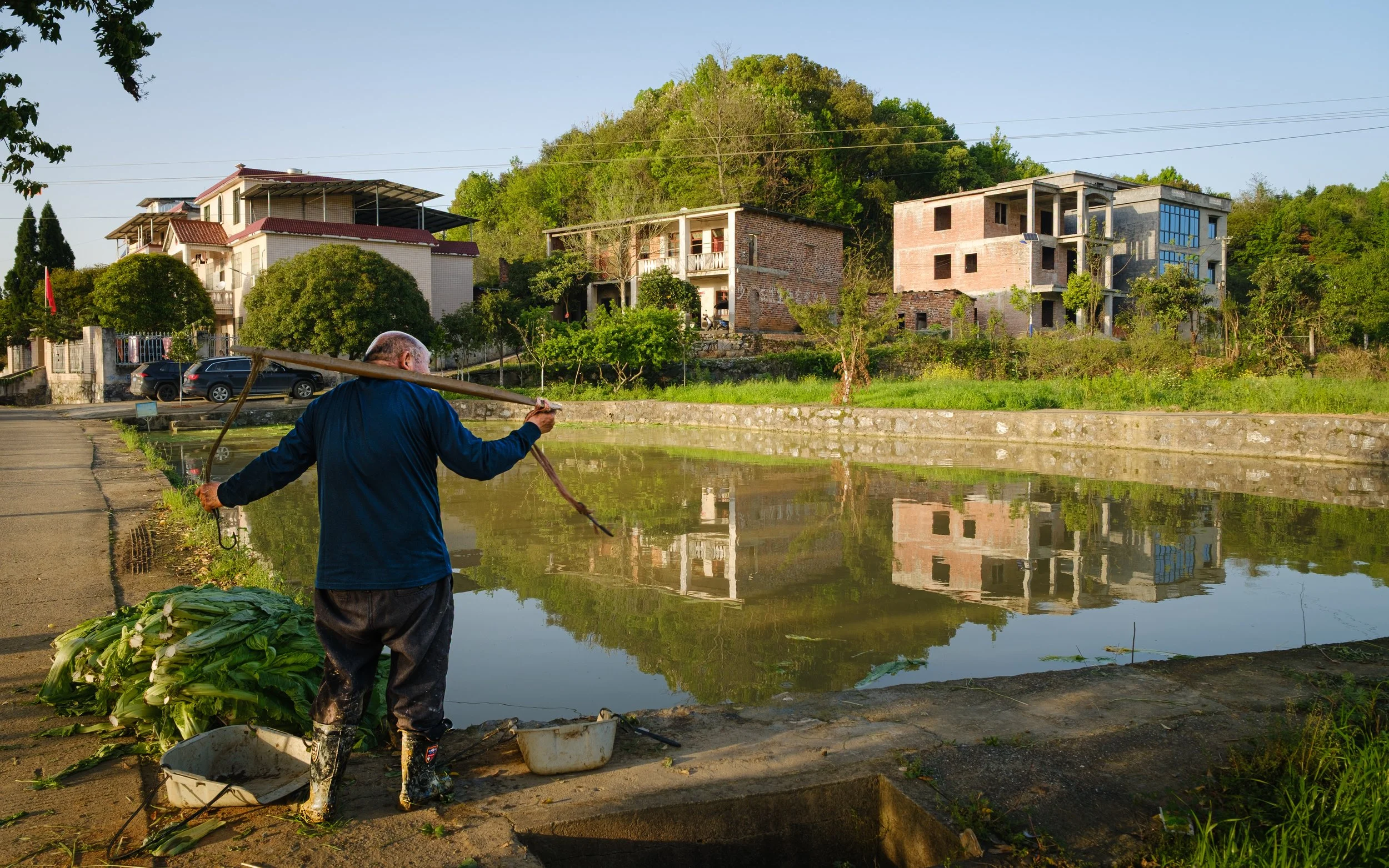
The village was different when I woke that morning. Voices carried across the fish ponds, cars lined the narrow road and new sedans with city plates parked beside old motorcycles. Qingming had begun.
A few times a year, this happens. The quiet village I had walked through the day before fills with life, children running between houses, uncles smoking in doorways, aunts playing cards. They come from Guangzhou, from Shenzhen, from Changsha. They come because this is where their people are buried, where their ancestral tablets are kept, where they're still from, no matter how long they've been gone.
This year, it was my family's turn to host the feast.
The Choreography of Twenty Tables
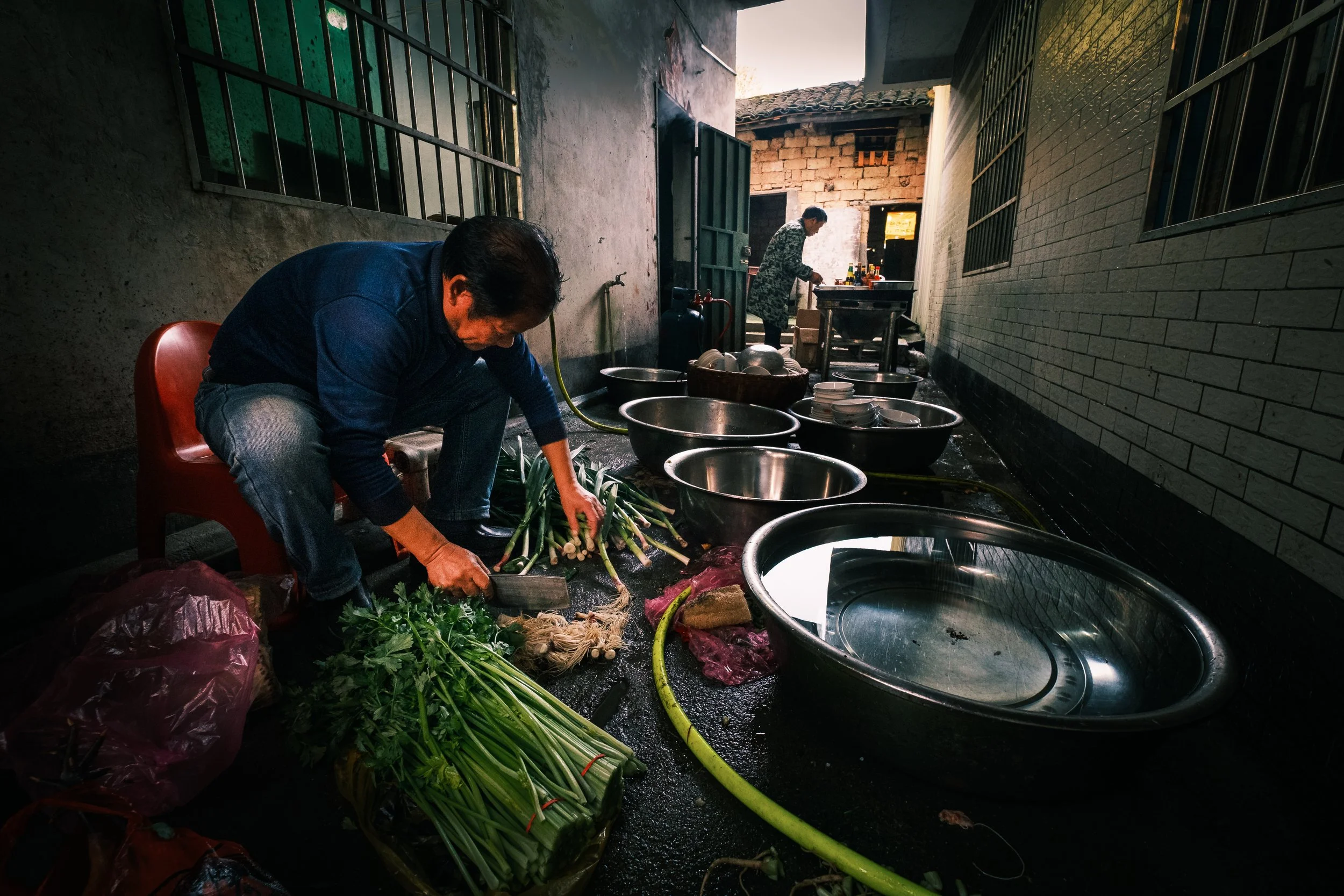
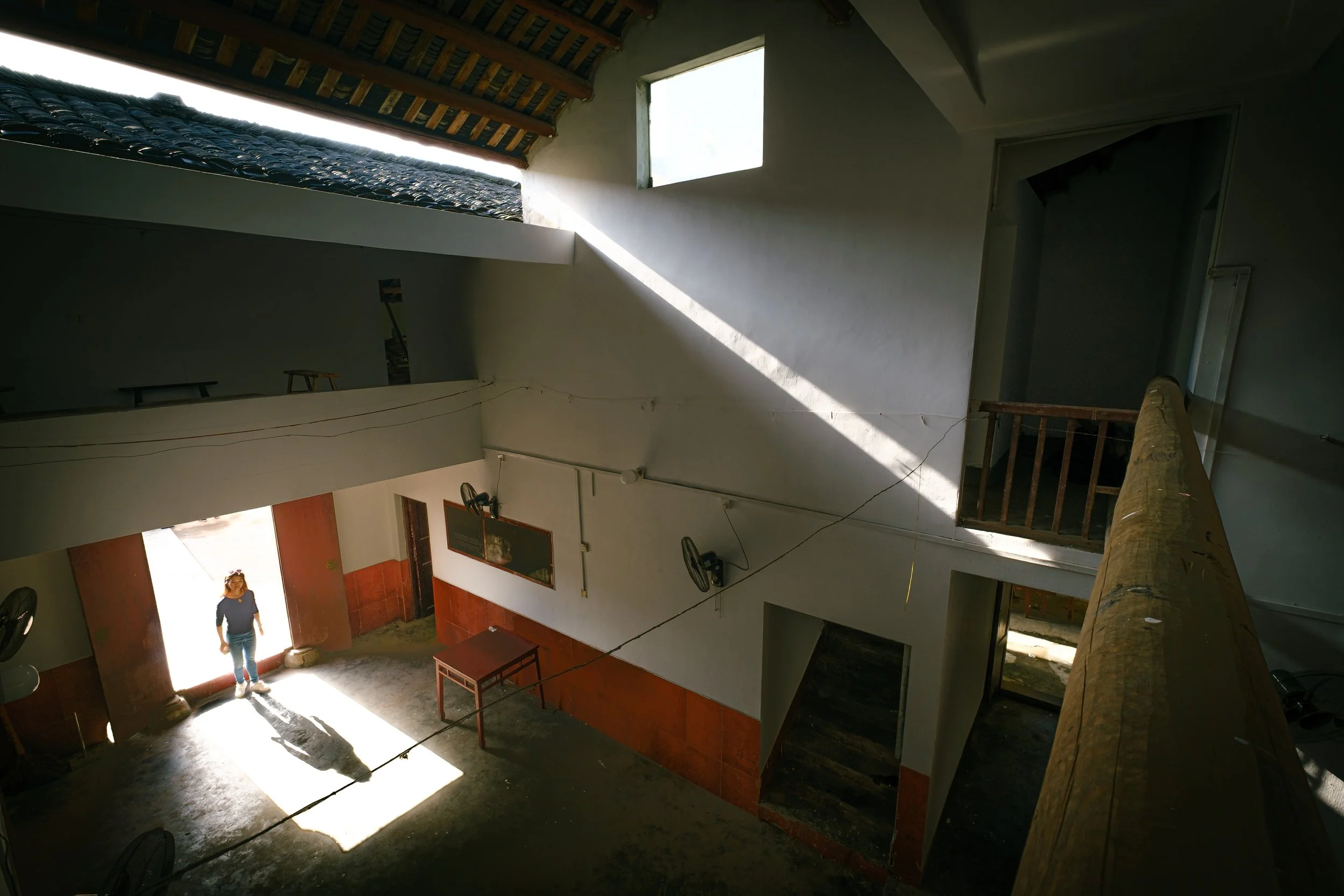
By mid-morning, the village communal hall had transformed into controlled chaos. The kind of chaos that only looks chaotic from the outside, while inside the logic, everyone knew exactly what they were doing.
Men fising in the village ponds, vegetables arriving in quantities I had only seen at wholesale markets. old women sitting in circle on low stools pealing some quail eggs, their hands moving with the efficiency of someone who'd done this a hundred times.
In the kitchen, if you could call it that, five woks were going at once. The heat was intense. Squadron of cooks moved around each other without speaking, without colliding. One handled the fish. Another the pork belly. A third was deep-frying something that made the whole hall smell like heaven. This was choreography. Thirty years of the same routine, the same roles, the same dance. They didn't need recipes or coordination. They just knew.
When Fireworks Mean Dinner
Evening fell fast. Suddently a loud noise, fireworks, not for show, just a signal, come eat!
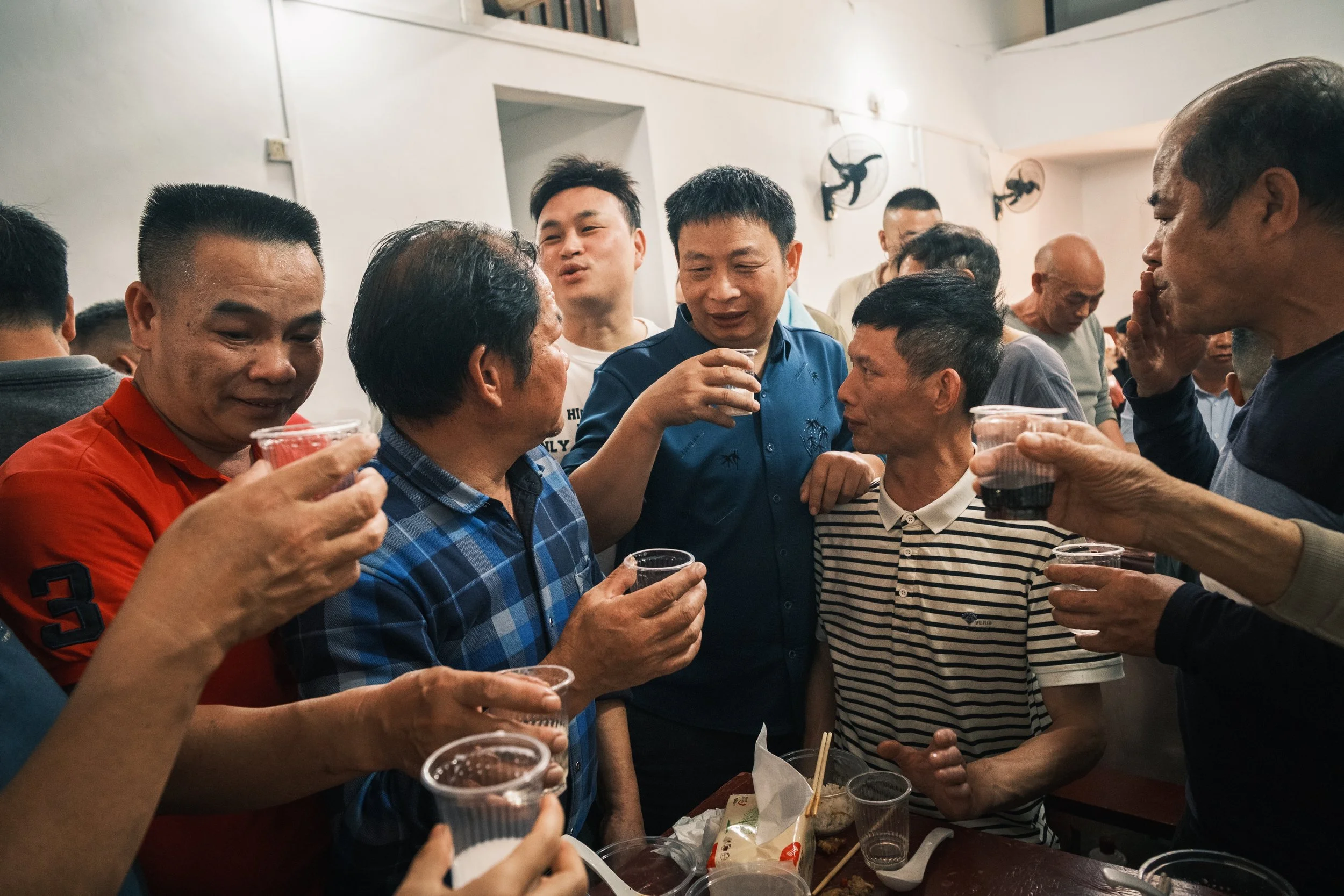
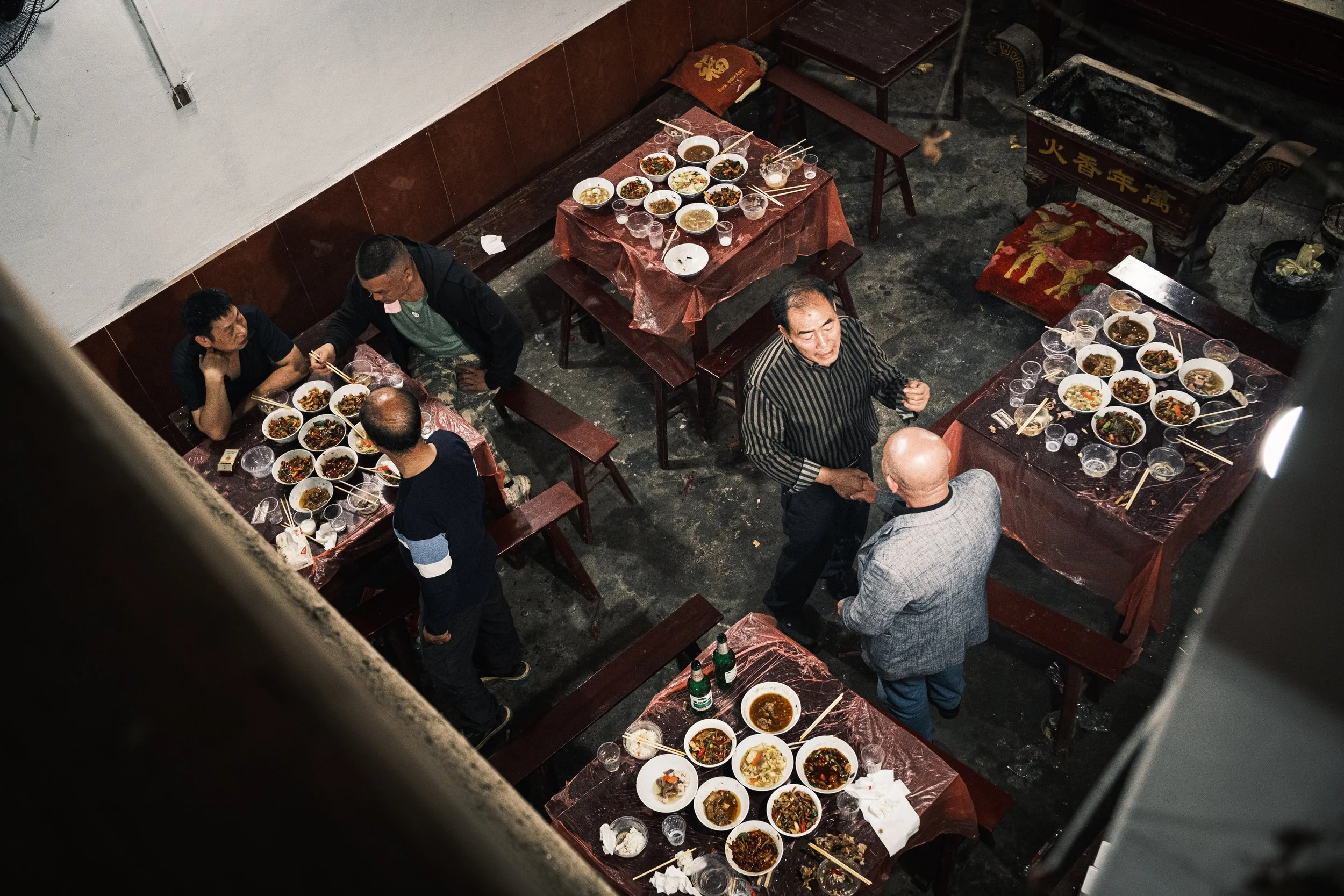
People emerged from houses, from conversations, from wherever they'd been catching up with cousins they hadn't seen since Spring Festival. The hall filled in minutes. I have been to many formal dinners in China and Hong Kong, banquets with lazy Susans the size of small cars. Western weddings where everyone sits straight and waits for toasts. This was nothing like that.
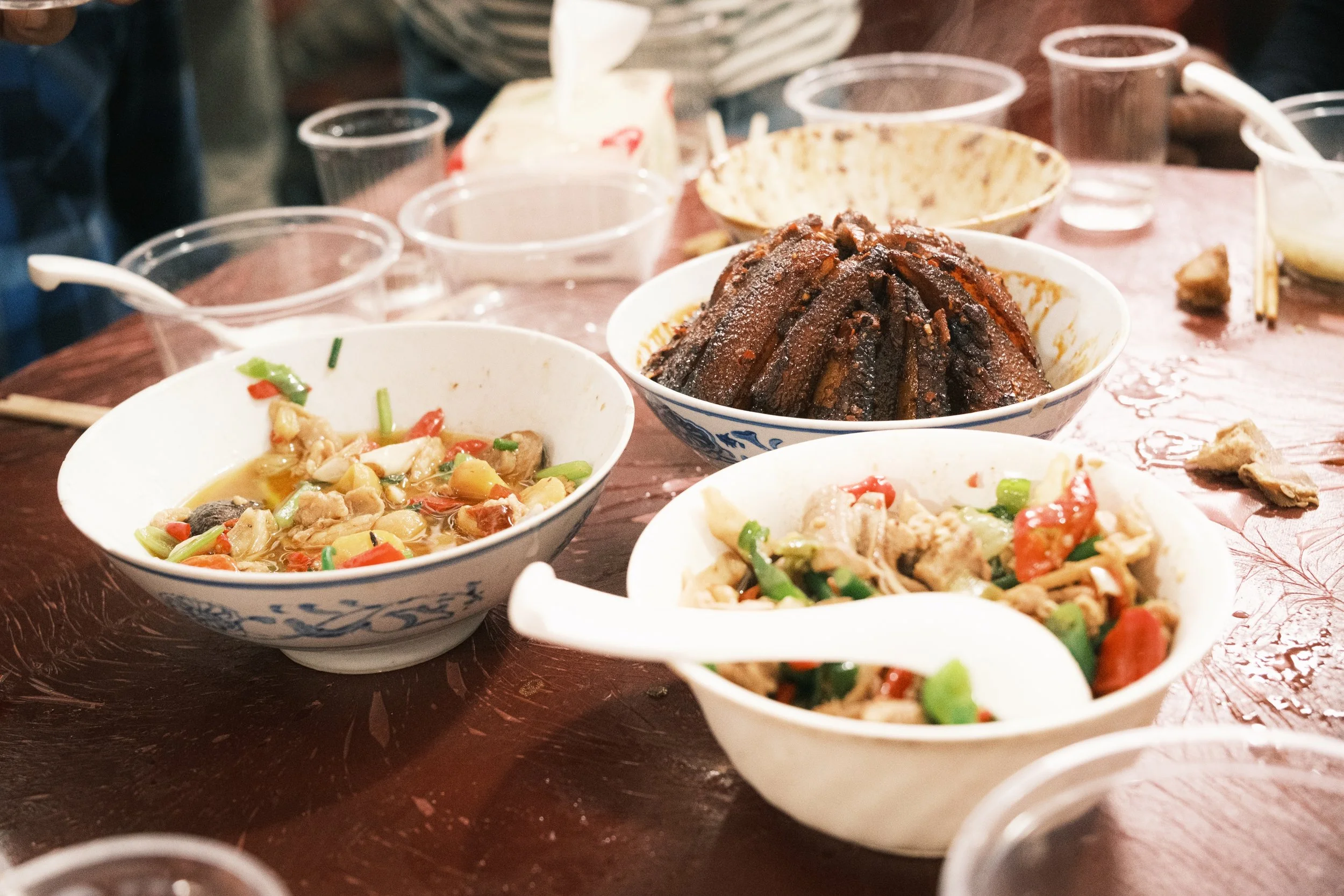
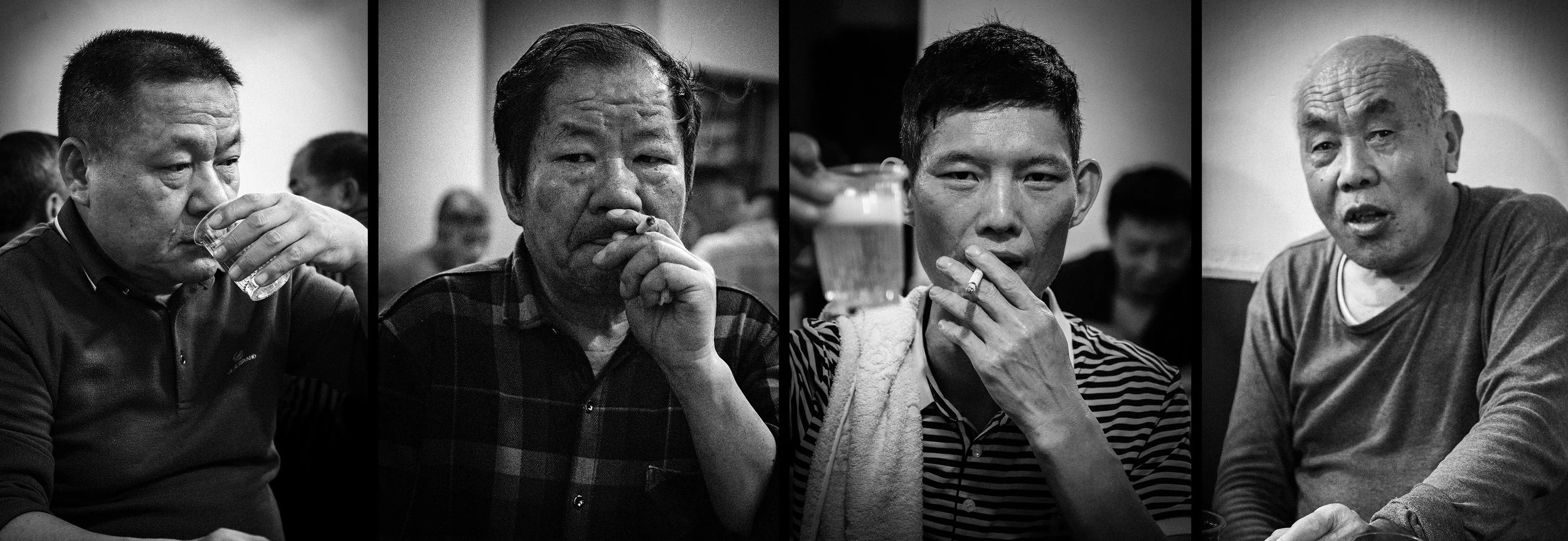
Here, friendliness wasn't an act, it was genuine. People pulled up chairs, squeezed in, made room. They poured baijiu for each other, the clear rice alcohol that burns all the way down. They smoked, they shouted across tables, they laughed at jokes I couldn't quite follow. Plates of fish, braised pork, stir-fried vegetables circulated.
The warmth wasn't about the food (though the food was obvisouly incredible) it was about being there. About the kid running between tables getting spoiled by every adult. About the old men doing rounds of Gambei. About the women trading stories about life in whatever city they'd moved to, while agreeing that nothing quite compared to home.
No one was checking their phone. No one was worried about getting back to anything. Time, for those hours, was not important. Not a commodity that we often trade in big cities.
I've always feel welcomed across my trips in China but something about this felt different. Maybe it was the baijiu. Maybe it was the collective nature of it, the whole village moving as one. Maybe it was just that I was finally understanding what hospitality really meant.
The Hill of Ancestors
The next morning, we climbed. The ancestors tombs aren't in a cemetery as you might expect, there is no cemetery. They're scattered across the hillside, each family having chosen their spot years ago, decades ago, sometimes centuries ago. Fengshui determines placement. Direction, elevation, the flow of the land. You don't just pick anywhere. You pick the right place.
My wife's family tombs sit high uphill, overlooking the below valley. Bamboo had grown up at an impressive rate around it since the last visit. The uncles hard at work, cut it, tomb sweeping carries its name honestly. Then came the offerings, paper money, paper houses, paper cars, paper cellphones, everything the ancestors might need in the next world, sent there through flame. Then fireworks. Not the signal kind from last night, the loud kind. They echoed across the valley and made dogs bark.
In the West, cemeteries are quiet and somber. You speak in whispers. Here, it's different. There's dignity, there's respect, but no sadness. You are not mourning, you are maintaining a relationship. Checking in and saying: we remember, we're still here, we're doing okay.
Tea on a Doorstep
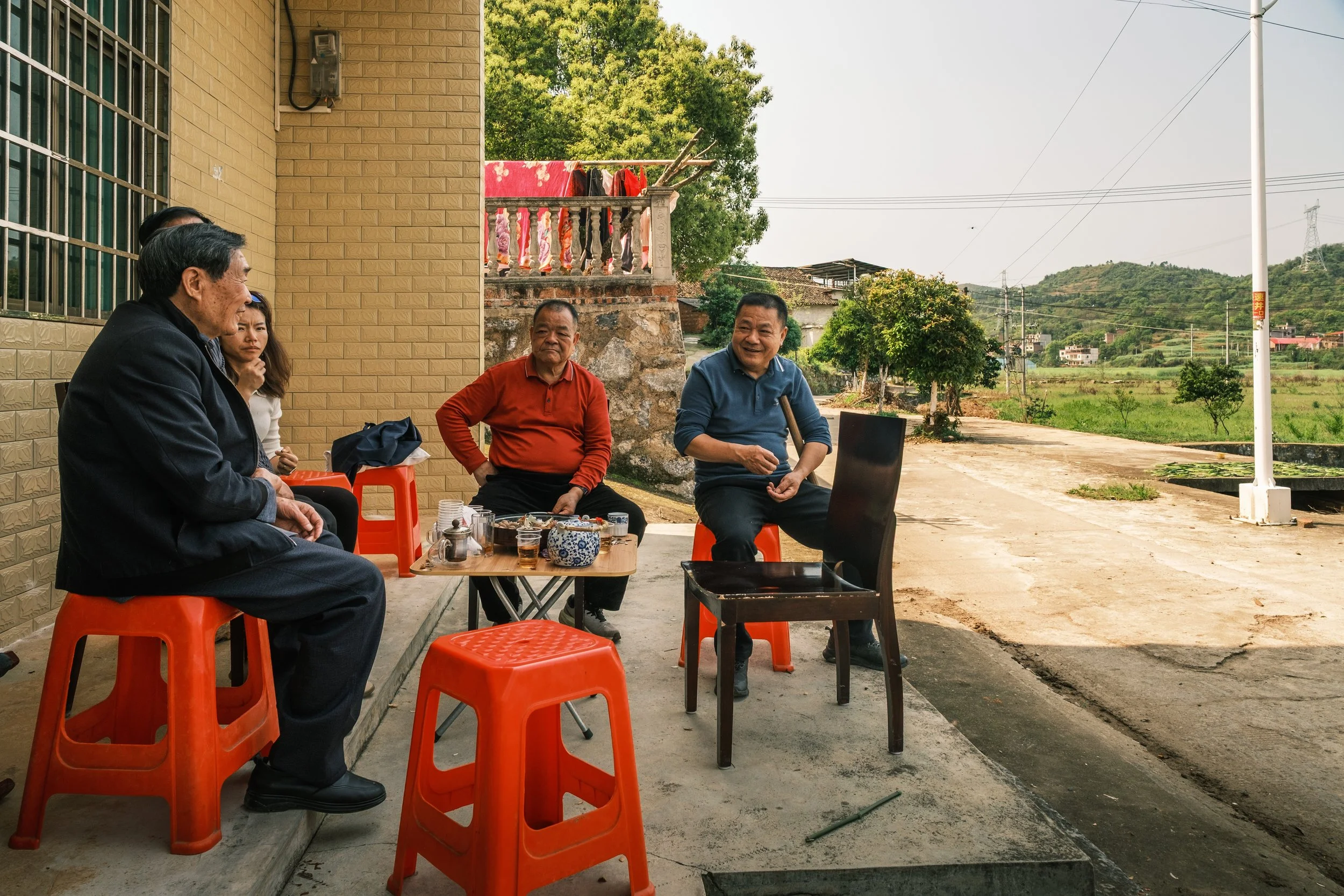
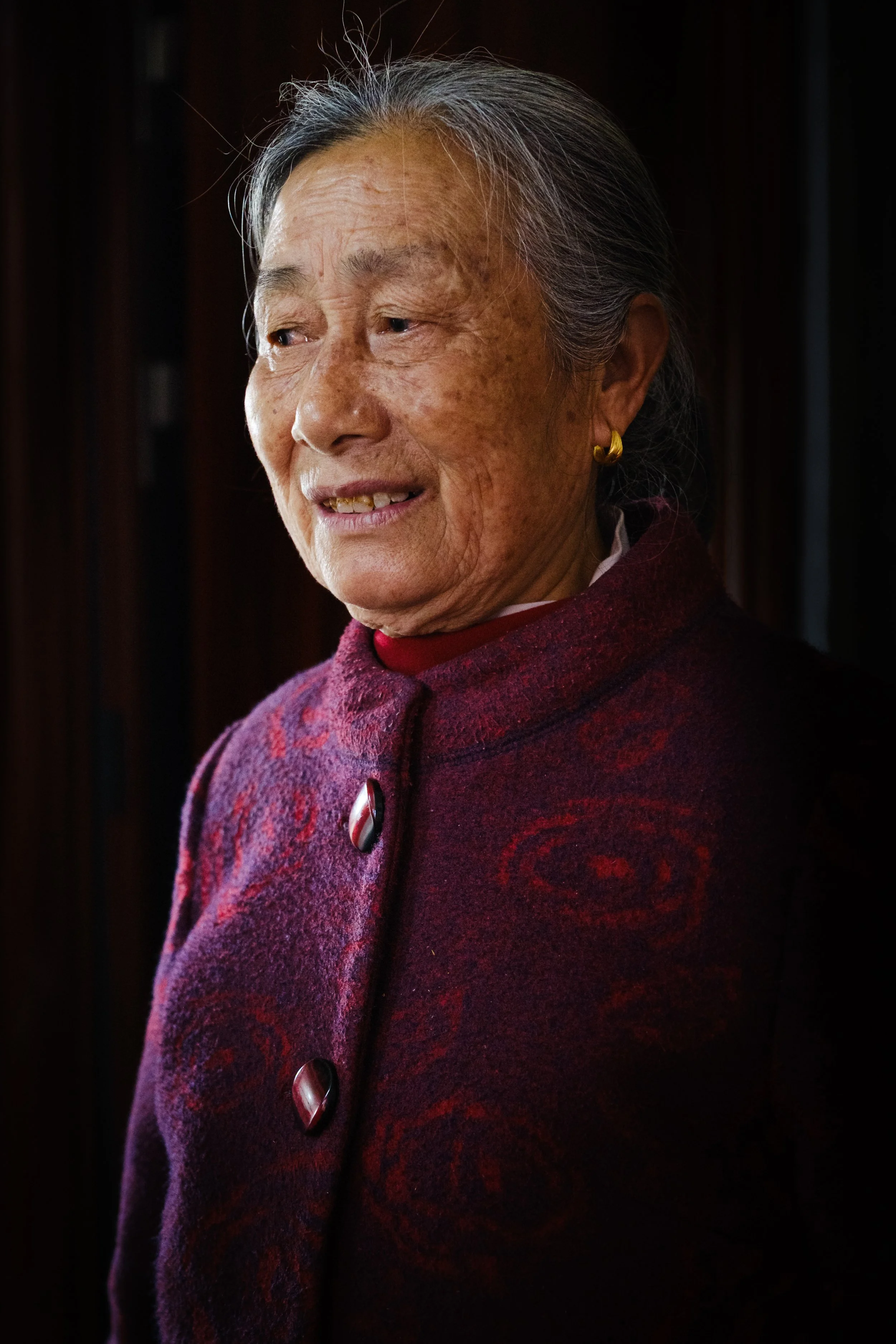
Walking back through the village, an old couple called out. They were sitting in front of ther house teacup in hand. They welcomed us to stop, have tea, and we sure did.
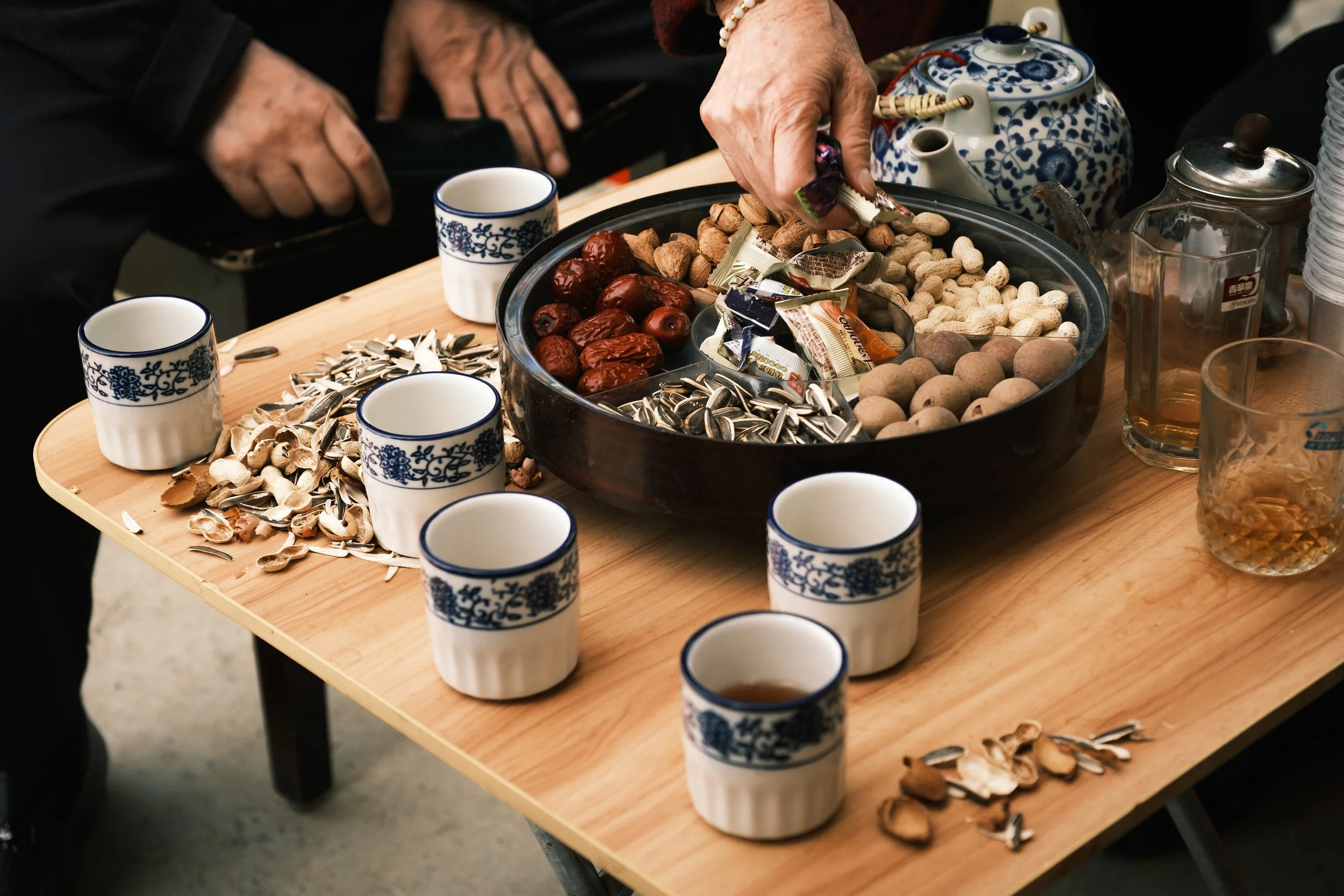
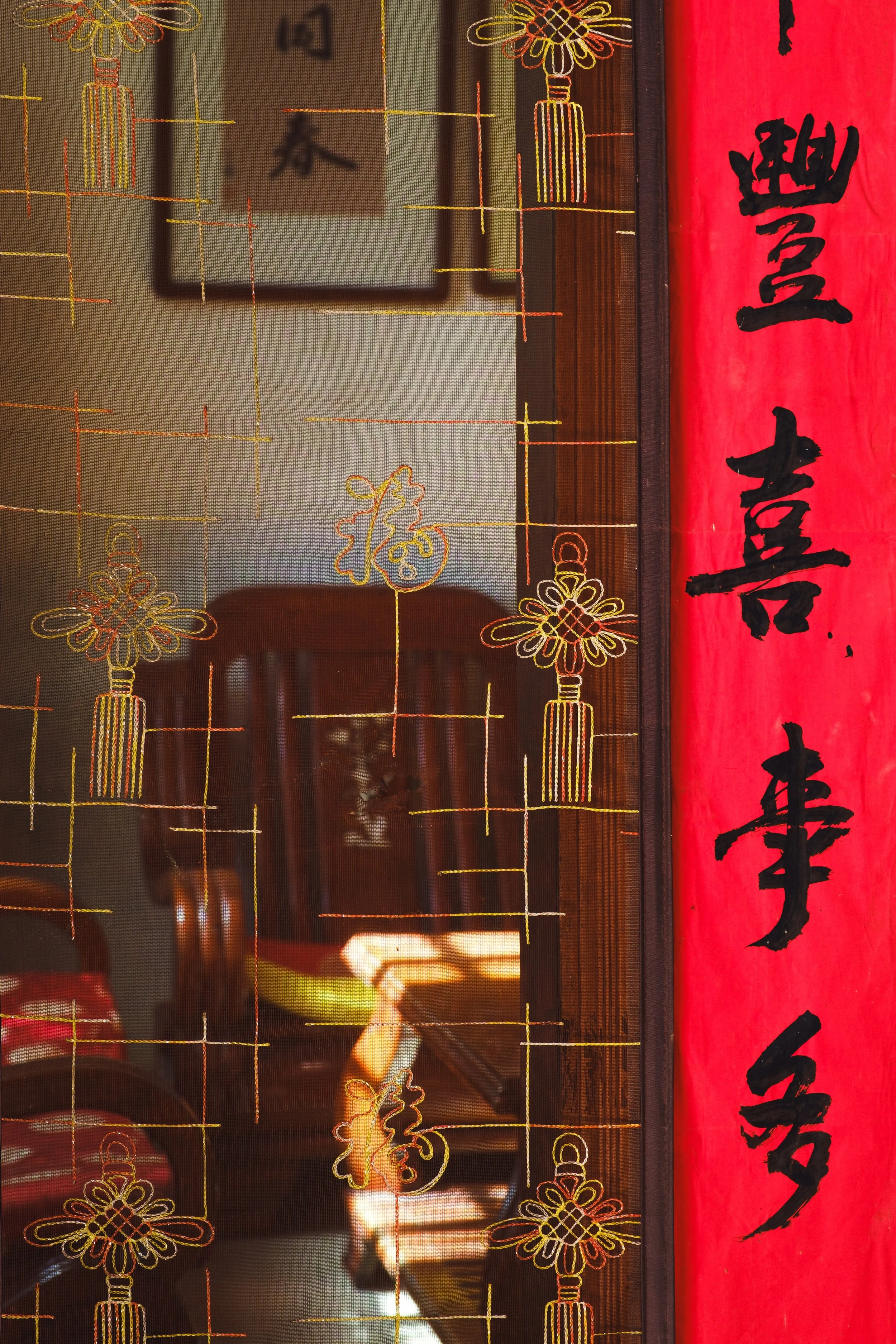
Their house was simple: tile floor, wooden furniture, a TV playing something they weren’t watching. They poured tea, the good kind, very fragrant, and brought out snacks: Preserved plums, sunflower seeds, peanuts, candies for the kids.
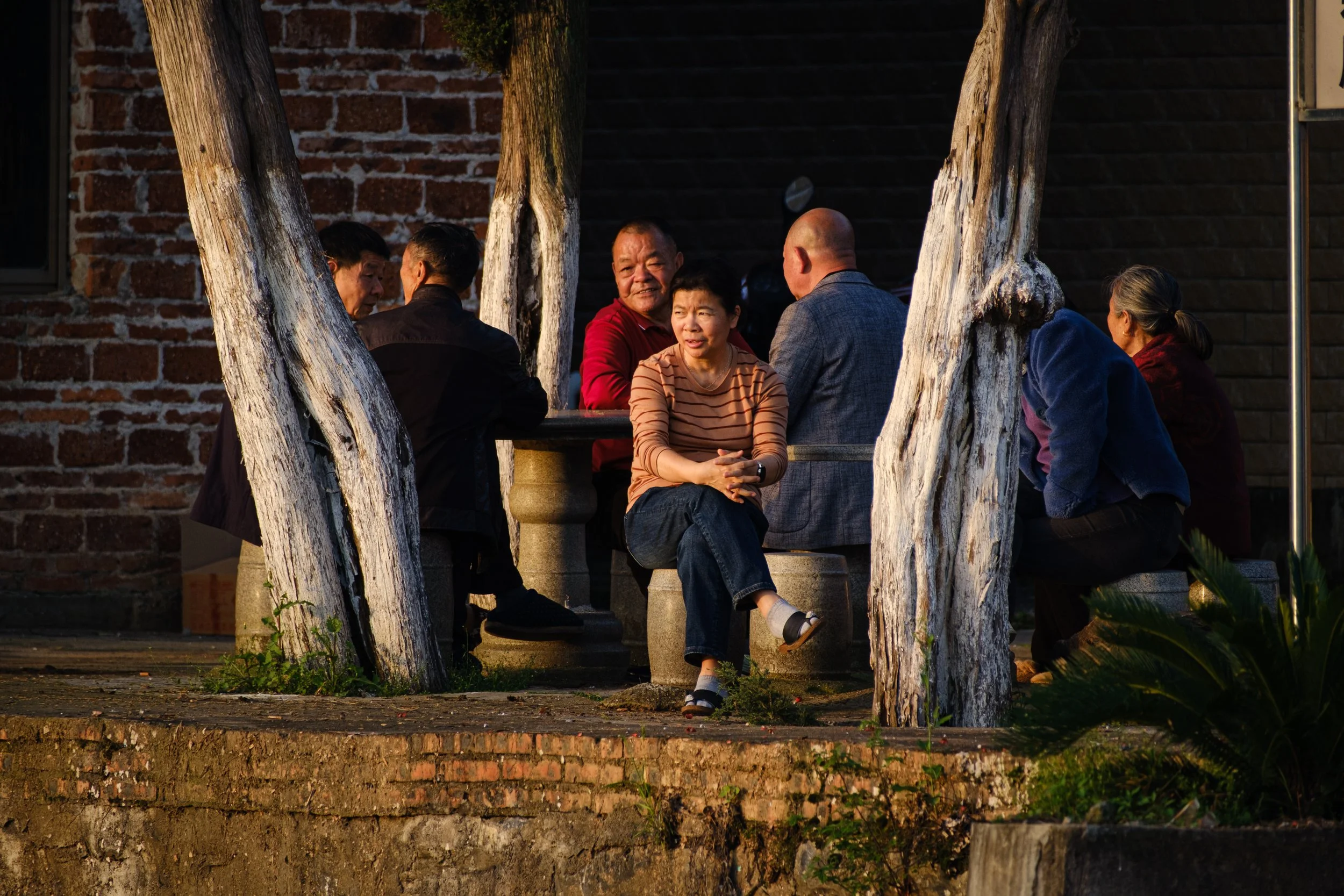
A motorcycle pulled up. It was a neighbor passing by, he saw us sitting, figured he'd join. Time and whatever he was doing were of no importance to him, what really mattered was catching up with his neighboors, bonding and interacting. We drank tea, we ate seeds, we watched the sun rise high as we were reaching midday. The neighbor left eventually. Then someone's kid ran past, got called in for a snack, ran off again.
There was no wealth on display here, no new furniture, no branded anything, no carefully curated aesthetic. Just kindness and the easy generosity of people who measure richness differently.
What We've Lost
I thought about my life in the city. The calendar always full, the notifications always coming, the stress, the money worries. The sense that time is the most valuable thing you have, so you'd better not waste it.
Here, time wasn't valuable. Or rather, it was valuable precisely because you could waste it. You could sit on a doorstep for an hour drinking tea with someone you barely knew. You could spend a whole afternoon preparing a feast for people who'd eat it in an hour. You could climb a hill to burn paper money for someone who died before you were born.
Maybe that's what we've lost. The permission to move slowly, to value relationships over productivity, to measure a good day by laughter, not accomplishment.
The village will empty out again. By Monday, most of those cars with city plates will be gone. The old woman will go back to her doorstep, alone with her tea. The fish ponds will be quiet.
But for one weekend, it was alive. And that aliveness, the feast, the fireworks, the tea, the people weren't a show nor a performance. It was life in its purest form.
Maybe the answers to our modern troubles is getting back to our roots, love, laugh, live ...
Bertrand Renaud is an award-winning French photographer based in Hong Kong. His work focuses on street photography and landscapes across South China.

